The Weekender: What’s Up With the Mule Barn?

Good morning, Clayton!
First off, thanks a ton for all the feedback you’ve sent about The Dispatch. I’m glad people are digging what we’re doing here. We’re growing, there’s a lot of cool new stuff coming soon, and I still have my sights set on putting out a print edition before the end of the year.
Stay tuned.
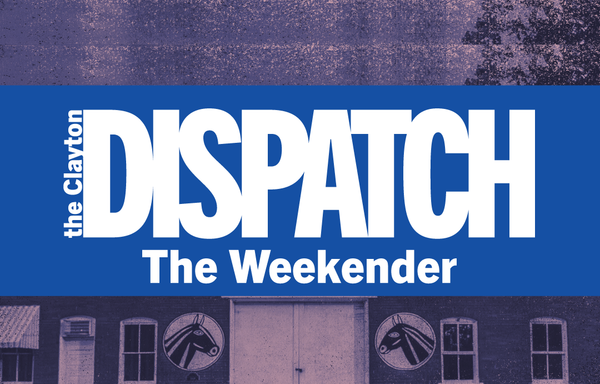
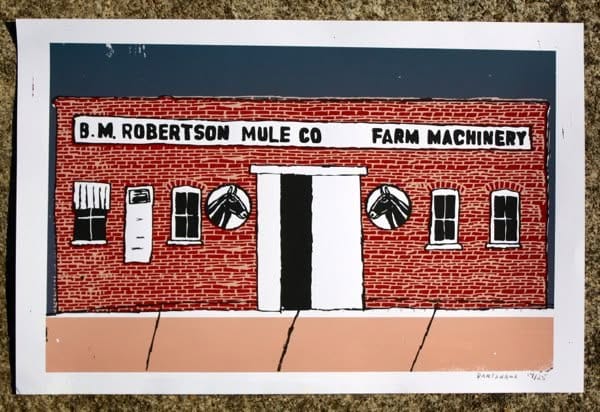
Today we’re getting into the B.M. Robertson Mule Co. building — or, as most locals call it, the Robertson Mule Barn.
To me, this whole project feels rushed and backward. The town paid $1 million for the property before completing its comprehensive assessments, has another $2 million penciled into the capital improvement plan, and still doesn’t have a final use, complete budget, or opening date in sight.
You be the judge.
Let’s get into it.
The Dispatch Lead

What’s Up With the Mule Barn?
A year and a half after purchasing one of Clayton’s most recognizable landmarks, the town has documented serious structural problems and collected plenty of ideas for its future. What it doesn’t have is a final plan, complete budget, or opening date. And as far as we can tell, we’re still pretty far off.
The old B.M. Robertson Mule Company building has stood at the corner of Second and Lombard streets for well over 100 years. It survived the transition from mules to tractors. It watched Clayton grow from a small agricultural town into one of the fastest-growing communities in the state. And for generations, the Robertson family kept much of that history inside: mule pens, water troughs, buggies, wagons, wheels, farm equipment, and more than a century of stories.
There’s no argument that this building matters to our town’s history. It does.
The tougher question is what Clayton should do with it now, and how much taxpayers should be prepared to spend getting there.
Back in December of 2024, the Town Council agreed to pay $1 million for the Robertson Building and an adjoining lot. At the time, town officials described the purchase as an opportunity to preserve an important piece of Clayton’s history and create a new public space for cultural events, community meetings, educational exhibits, and other uses.
The exact use has still yet to come.
First, consultants would assess the building, gather stakeholder and community input, and make recommendations.
That process has now produced a long list of possibilities, and a much clearer picture of just how expensive the project could become.
A Building Worth Saving
Samuel Earl Robertson was born in Clayton in 1917, three years after his father, Battle Moore “Batt” Robertson, constructed the brick stable.
In 2015, Sam Robertson was awarded the Downtown Contributor award by the Clayton Downtown Development Association, and the town produced a really great video for the event. In it, Sam recalls growing up when Clayton was little more than an unpaved crossroads town of maybe 1,000 people. After serving as a B-17 ball-turret gunner during World War II, he returned home and joined his brother John at B.M. Robertson Mule Co. in Downtown Clayton.
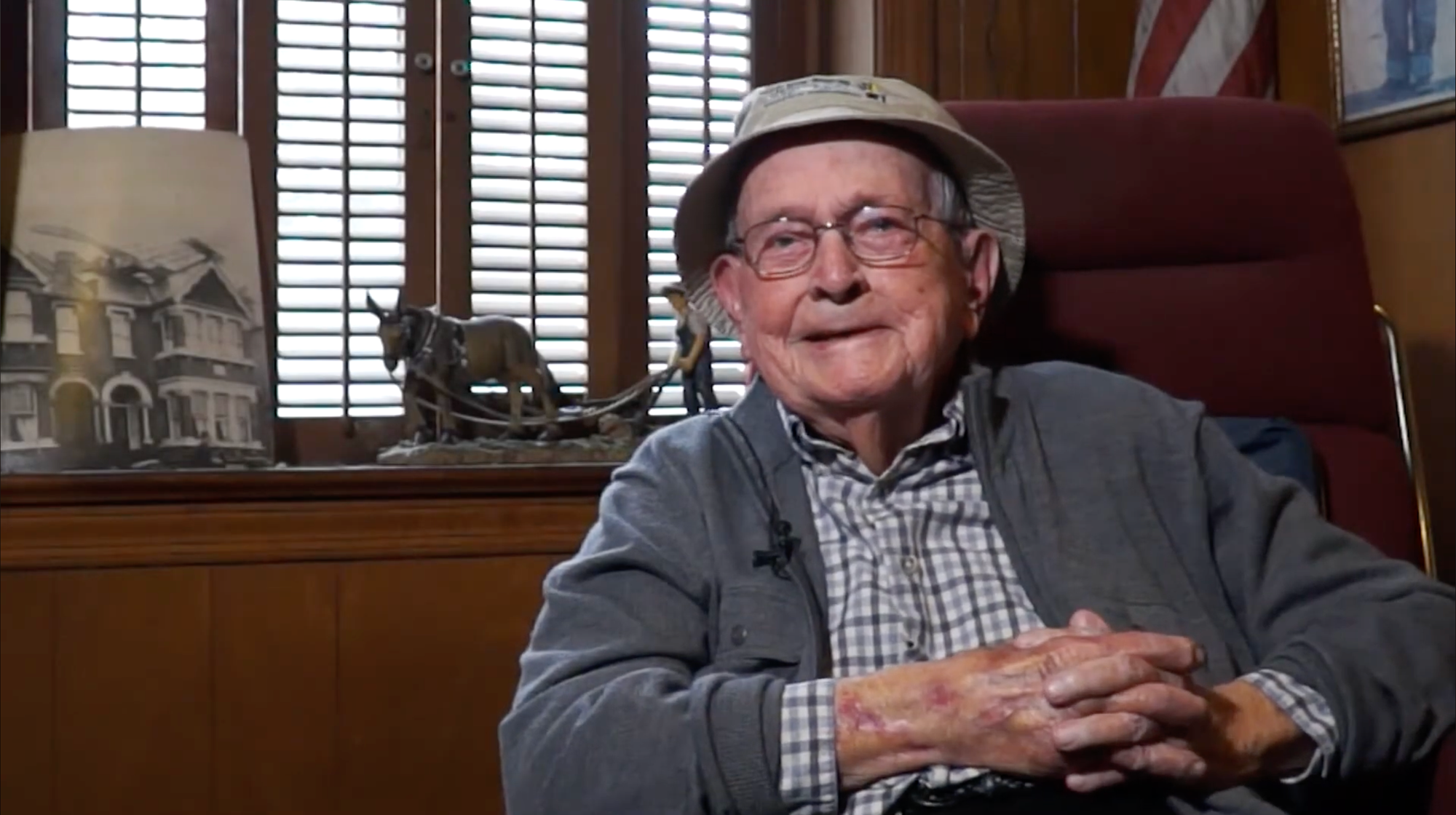
The company changed with the times. As tractors became more common, farmers began trading their mules for farm machinery. The last mules were sold sometime in the early 1960s, and the business continued selling tractors and farming tools for decades.
By the time Sam retired in 2002, B.M. Robertson Mule Co. was described as Clayton’s oldest continuously family-operated business.
Sam continued spending time at the stable during retirement, welcoming people who stopped by to hear his stories about Clayton, Duke, the war, and the family business.
In the video, Sam looked around at old pens, wagons, and equipment and summed it up simply:
“Everything in here is old, including me.”
That history is what the town purchased, and it is absolutely worth preserving.
But taxpayers didn’t buy the history alone. They also bought everything that comes with converting a 112-year-old mule stable into a safe, modern public building.
That’s an important distinction — especially at a time when residents are already being asked to absorb higher costs for basic services like water, sewer, and electricity. A building can be worth saving while the public still deserves honest answers about the costs and project timeline.
The Town Bought the Cart, Then Went Looking for the Mule.
Before Clayton agreed to pay $1 million for the Robertson Building, town staff conducted what officials now describe as a preliminary facility-condition assessment.
The comprehensive facility, structural, and environmental assessments did not come until after the town owned the property.
There was no formal appraisal establishing a market value before purchasing the building.
The Robertson family had hired Williams-Crocker and Associates to evaluate the property, but the firm did not put a dollar figure on it. Instead, it wrote that the building offered a sense of history, civic pride and sentiment that “cannot be valued.”
The town decided that $1 million was fair, given the opportunity to acquire and preserve a historic downtown landmark.
History may be priceless. Real estate generally is not.
After the purchase, Clayton hired consultants to take a much closer look at the property and begin studying what it could become.
At a July 2025 work session, council members were told that testing had found asbestos in office flooring and roof material, lead paint on several interior and exterior surfaces, moisture intrusion and diesel-contaminated soil at levels eight times higher than acceptable for indoor spaces.
The Dispatch has placed most of that information directly into our “No Shit” file, seeing as how this is a century-old commercial building that once housed livestock, tractors and farm equipment.
Then came the serious(ly expensive) findings.
A later structural report recommends completely replacing the existing roof, including its framing and decking. Engineers concluded that the roof “lacks capacity for safe occupancy” and called for temporary shoring in areas showing significant sagging, deterioration and compromised supports.
The report also found the building’s masonry walls to be “functionally inadequate” for the proposed change in use. Engineers documented moisture intrusion, eroded mortar, cracked and loose bricks, organic growth and damage caused by previous repairs made with incompatible materials.
We’re talking about much more than a coat of paint and accessible bathrooms.
Before it can become an event venue, museum, welcome center or anything else open to the public, Clayton first has to make sure the roof stays on, and the walls stay up.
Another $1 Million Just to Get to the Starting Line
The current preliminary estimate for masonry and building-envelope repairs is approximately $600,000.
That estimate includes:
$250,000 for exterior tuck-pointing
$100,000 for below-grade damp-proofing
$75,000 to replace broken bricks
$75,000 for a damp-proofing course
$25,000 to rebuild the parapets
$25,000 to remove and correct incompatible previous repairs
Several items remain listed as “to be determined,” including treatment of the interior brick coating, masonry testing, recurring maintenance and any additional problems uncovered during construction.
A replacement structural roof system is estimated at another $400,000.
Together, those preliminary figures total roughly $1 million — the same amount Clayton initially paid for the property.
And that’s still pretty far from the complete renovation.
The estimates don’t include the full cost of asbestos and lead remediation, contaminated soil cleanup, HVAC installation, plumbing, updated electrical work, fire protection, interior construction, architectural and engineering fees, furniture, or equipment.
They also don’t include the ongoing cost of staffing, programming, utilities, insurance, and regular maintenance duties for whatever the building eventually becomes.
These are not theoretical recurring expenses. The Jacobs study itself discusses the possible need for an events coordinator and repeatedly warns that both capital and operating expenses must be considered.
But there’s no staffing plan. There’s no operating budget. There’s not even an operation to budget for. Not yet, at least.
So here’s what the math looks like so far:
Clayton spent $1 million to buy the Robertson Building.
Engineers estimate that it could take roughly another $1 million to repair the roof and exterior.
Then the actual project can begin.
The Town Has Already Budgeted an Additional $2 Million.
The town says it doesn’t yet have a final estimate for stabilizing and renovating the building because the council hasn’t selected a use or approved a detailed design.
But the approved fiscal year 2027 Capital Improvement Plan includes $2 million for the Robertson Building’s restoration and renovation.
That doesn’t mean Clayton has already spent $3 million. A capital-plan figure is not a final construction bill.
It does mean the town bought the property for $1 million and has now placed another $2 million in its capital plan before deciding what the completed building will be.
Clayton has also incurred $100,000 in professional-service costs associated with evaluating the property. An ElectriCities grant covered $15,000, leaving $85,000 funded through town resources.
The town separately confirmed spending approximately $16,000 on a documentary produced by Jason Bullock Films. Officials say the film was commissioned to document the building and its contents before anything was disturbed and to preserve stories from the Robertson family and other community members.
The film will premiere during a public event on September 14 at The Clayton Center.
The town has also received a $700,000 state grant for the purchase and restoration of a historic building and says it intends to use the money for the Robertson property.
Whether that $700,000 is already included in the $2 million capital-plan figure remains unclear. The town also did not directly answer whether the grant imposes restrictions on the building’s eventual use, including whether it must operate as a welcome or visitor center.
Plenty of Possibilities
Jacobs Engineering led workshops and interviews in July 2025 with elected officials, town departments, advisory boards, community stakeholders and members of the Robertson family.
The sessions produced plenty of ideas. Participants suggested an aforementioned welcome center, museum, cultural arts facility, event venue, teaching or commissary kitchen, open-air market, makerspace, classrooms, nonprofit meeting space, public restrooms, and room for local entrepreneurs.
One of the strongest recurring concepts—and something The Dispatch has heard independently from residents—was a community “third place”: somewhere other than home or work where people could gather, attend classes, volunteer, socialize and participate in cultural events without spending much money.
Think listening space for local musicians, a black-box theater for community performances, affordable classrooms, or simply somewhere for teenagers and adults to exist without being expected to buy something.
There were also concerns about operating expenses, limited parking and creating a publicly subsidized facility that might compete with existing downtown businesses.
The report says the project should support community life and economic development “without becoming a tax burden.” It suggests grants and private partnerships as possible funding sources.
But it doesn’t recommend a final use.
It documents what Clayton might do with the building. It doesn’t determine what the town can afford, how the operation would sustain itself, or who would cover the annual bill.
A year after the initial workshops, those questions remain unanswered.
The Town Has Done Work
It would be inaccurate to say the town bought the property and then forgot about it.
Clayton has commissioned environmental, building, and structural assessments. It hired Jacobs to conduct the adaptive reuse process. Officials have gathered stakeholder input and have started considering how to preserve the historic objects stored inside.
Mayor Jody McLeod told The Dispatch that he remains excited about the possibilities and hopes the town will continue to stabilize the structure while seeking community input on its “best and highest use.”
McLeod said Clayton would pursue grants and seek help from corporate partners and community organizations.
“ I am certain that there are multiple ways to support additional funding,” McLeod said.
That outside support could eventually reduce the town’s share of the project. Hopefully they don’t show up with restrictive strings attached or give private partners pay-to-play control over what is supposed to become a public asset.
What Happens Next?
This newly announced public event on September 14 will include the documentary premiere, a presentation of the Jacobs study, and a discussion of potential options for the building.
The town says no final use has been selected. Feedback gathered at the event will help guide the council, and the project may also be discussed during the council’s fall retreat.
Only after a preferred use is picked will Clayton develop a detailed scope, final cost estimate, funding plan and project schedule.
That means it will likely be a good while before we get:
A construction start date.
An opening date.
A total price tag.
Or even a firm answer about what we’re going to do with the damn thing.
Again, the Robertson Building is absolutely worth saving. But “worth saving” ain’t a financing plan, it ain’t an operating model, and it damn sure ain’t a blank check.
Keep in mind that less than two months ago, tax-paying residents stood before the Town Council and pleaded for relief from rising water, sewer, and electric bills. Yes, those utilities are funded separately from this project, but residents ultimately experience town spending through their household budgets.
Right now, Clayton has a building it purchased for $1 million without a formal appraisal, another $2 million penciled into its capital improvement plan, at least $100,000 in professional services, a $16,000 documentary, an unsafe roof, and a long list of ideas.
What it does not have is a final plan.
And that, as far as we can tell, is what’s up with the Mule Barn.
Town Hall Watch
Clayton Town Council | Monday, July 20 | 6 p.m.
The Clayton Town Council has four public hearings scheduled for Monday night, including a proposed industrial development that the Planning Board has already recommended be denied.
The biggest item is Stotan Crossings, a proposed industrial project on Guy Road in Wake County, just south of Golden Nugget Drive. Council will first consider annexing approximately 44 acres into Clayton, then rezoning 43.23 acres from Wake County residential zoning to Clayton’s Conditional Industrial district.
The applicant has described the project as a two-building industrial park for light manufacturing and warehouse distribution. The traffic study evaluated up to 376,480 square feet of industrial space and estimated that the development could generate roughly 1,466 vehicle trips per day.
The Planning Board recommended denial by a 5–3 vote, citing concerns about industrial noise and lighting near existing homes, along with the project’s inconsistency with current land-use plans. Town planning staff is recommending approval anyway, arguing that growth around the future Triangle Expressway could shift the area toward more commercial and industrial development.
Since the Planning Board meeting, the applicant has added larger landscape buffers and agreed to prohibit data centers on the property. The project would also require new turn lanes along Guy Road.
Also returning—again—is Arbors at East Village Phase II, a proposed 45-unit, townhouse-style rental development on 4.19 acres near East Front Street and Bent Branch Loop.
The proposal includes eight buildings, private access drives, garages, 12 visitor spaces and a gazebo connected to the East Front Street greenway. The application has bounced between council meetings since March. The latest revisions add stronger architectural requirements along East Front Street, additional screening, and an easement for a future Town of Clayton sign. Both staff and the Planning Board recommend approval.
Council will also consider rezoning three town-owned properties totaling 143.38 acres to Public Facilities zoning. Two large properties—108.53 acres and 33.97 acres—are located near Jack Road. The town says there are currently no active development plans for either one.
The third property is a smaller 0.88-acre parcel at 151 Short Johnson Road that is expected to become part of the future Southwest Public Safety Center. The Planning Board unanimously recommended approving all three rezonings, even though the two Jack Road properties do not fully align with the town’s current Future Land Use Map.
Finally, council will consider agreements advancing two long-planned greenway projects along N.C. 42:
- A 1.06-mile shared-use path from East Front Street to Glen Laurel Road, with up to $4.78 million in federal participation.
- A 0.54-mile section of the Mountains-to-Sea Trail from Fox Ridge Road to the Neuse River bridge, with up to $2.95 million in federal participation.
Both projects require a 20 percent local match. Signing the agreements moves the projects forward but does not, by itself, authorize construction.
Budget Manager Todd Melton is also scheduled to provide the council’s quarterly budget update before the meeting heads into closed session to discuss economic development and the possible purchase of real estate.
Downtown Dispatch

Final Weekend for Downtown Clayton Restaurant Week
Downtown Clayton Restaurant Week wraps up this weekend, with participating restaurants offering new dishes, prix fixe menus and a few returning favorites.
Specials include all-day breakfast at Jones Cafe, prix fixe menus at The Lover’s Bite, Luna Pizza Cafe and Snacks Provision Company, half-price wine carafes at Luna, and new menu items from Crescendo, Fare Game, First Street Tavern, Primo Pizza and Vinson’s Pub + Eatery.
Punch cards are available at participating restaurants. Visit six different locations during Restaurant Week and turn in your card for a chance to win a gift card to one of the participating businesses. Regular menus are also available, and hours vary by location.
Weekend Picks
A quick rundown of what’s happening around Clayton this weekend. Music, markets, food, family stuff, and anything else worth leaving the house for.
Friday

Vinyl Night
LaDiDa Wine Shop | 417 E. Main Street
4 Track Records will take over LaDiDa Wine Shop on Friday night, spinning vinyl from 7 to 9 p.m. and bringing along a curated selection of records for sale. Grab a glass of wine, browse the crates, and settle in for an easygoing night of good music.
Emanuel Wynter Live
Crescendo at The Station | 231 E. Second Street
Singer, songwriter, and multi-instrumentalist Emanuel Wynter takes the Crescendo stage for a night of live music at The Station.
Saturday

Jorts in July
Deep River Brewing Company | 700 W. Main Street, Suite 102Deep River Brewing Company is celebrating the finest fashion statement ever created: jean shorts. Jorts in July runs all day Saturday with food trucks, live music from the Van Meter Band from 2 to 5 p.m., country karaoke from 6 to 9 p.m., denim awards, cornhole, water pong, a watermelon seed-spitting contest and even a husband-calling contest. The first 50 customers to make a taproom purchase will also receive a free limited-edition Jorts koozie.
Movies in the Garden: Ferngully
Main Street Community Garden | 439 E. Main St. | 7 pm
A family-friendly outdoor movie night in the garden featuring FernGully, the animated rainforest adventure that got there way before Avatar. Bring a chair or blanket, settle in under the stars, and enjoy a stacked voice cast that includes Robin Williams, Tim Curry, Christian Slater, Samantha Mathis, Cheech & Chong, and more.
Faithfully: An Eagles and Journey Tribute
The Clayton Center | 111 E. Second Street
Faithfully brings the music of two classic-rock giants to The Clayton Center on Saturday night. The Nashville-based tribute act will perform hits from the Eagles and Journey, including “Hotel California,” “Take It Easy,” “Don’t Stop Believin’” and “Any Way You Want It.”
Sunday

Custom Clay Tray Workshop
Pottery Camp | 12973 US-70 Business
Create a custom tray or dish from a clay slab during this hands-on workshop at Pottery Camp. Participants can choose from several shapes and sizes, then decorate their piece with underglaze transfers while learning the basics of clay hand-building and glazing. The class is recommended for ages 10 and older, though younger children may participate with assistance.
Dawson Wright Live
First Street Tavern | 115 E. First Street
Local musician Dawson Wright brings live music to First Street Tavern on Sunday from 3 to 6 p.m. The tavern opens at noon with $5 mimosas and $7 Bloody Marys.
Music Bingo
LaDiDa Wine Shop | 417 E. Main Street
LaDiDa Wine Shop hosts Music Bingo on Sunday from 2 to 4 p.m., with Mike Brock Entertainment leading the game and prizes awarded every round. The event is open to adults ages 21 and older.
One Good Thing
Every week, we're going to try and end on a positive note. Snapshots of Clayton history, local legends, monumental ackomplishments in the community, and more. This section is supposed to make you feel good.
Clayton’s Little Boxes of Help
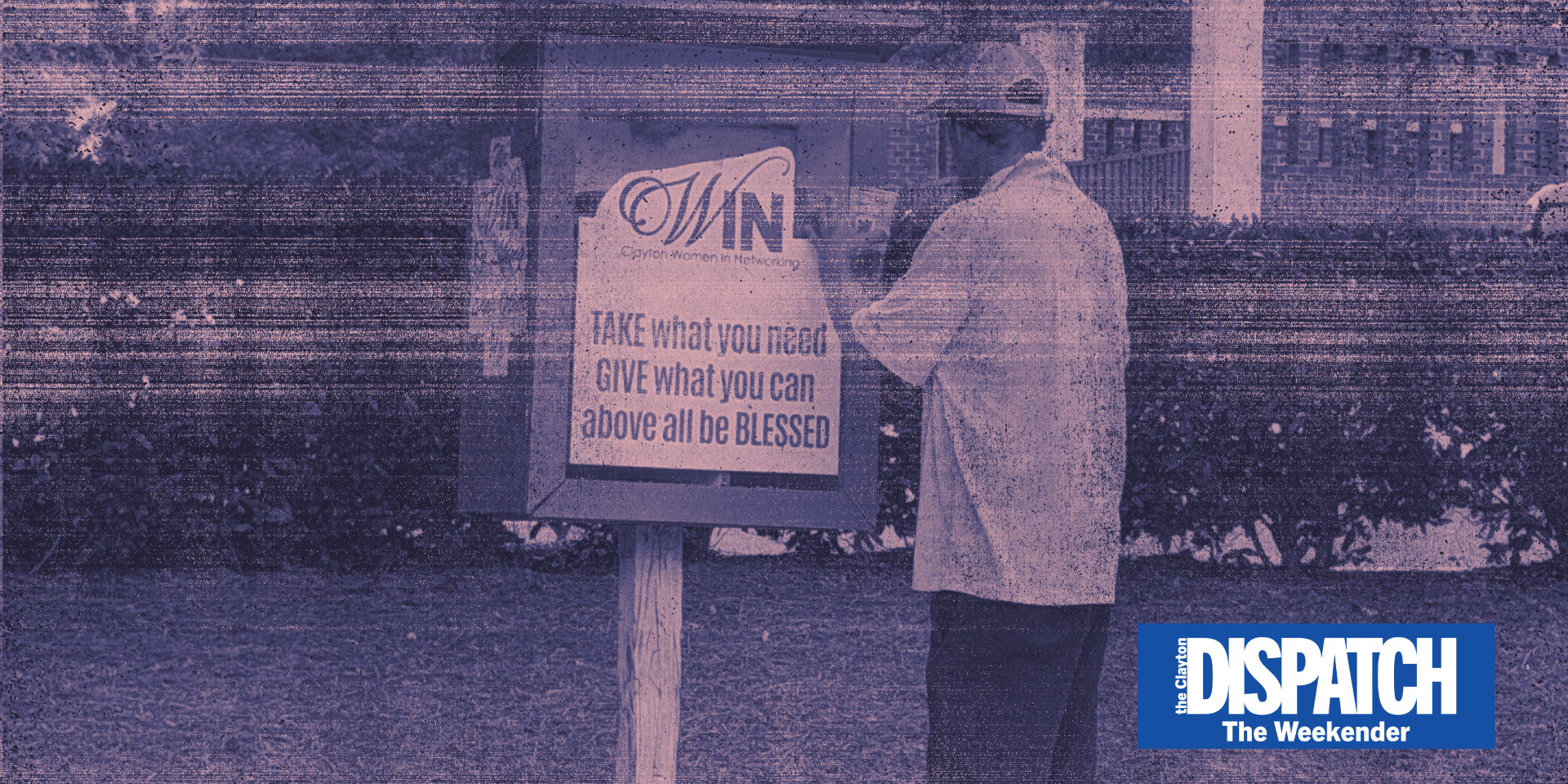
Sometimes the best parts of a community are not the biggest projects or the loudest announcements.
Sometimes they’re small wooden boxes sitting outside of churches, businesses, schools, and other neighborhood gathering places. Quietly waiting for someone who needs what’s inside.
Across Clayton, blessing boxes offer free food and household essentials. A period pantry provides menstrual and hygiene products without questions or embarrassment. A pet pantry helps families care for their special buddies when money gets tight. Little Free Libraries keep books moving from one reader to the next, while the Little Free Art Library at Artmosphere Community Arts Center puts creative supplies into the hands of anyone inspired to make something.
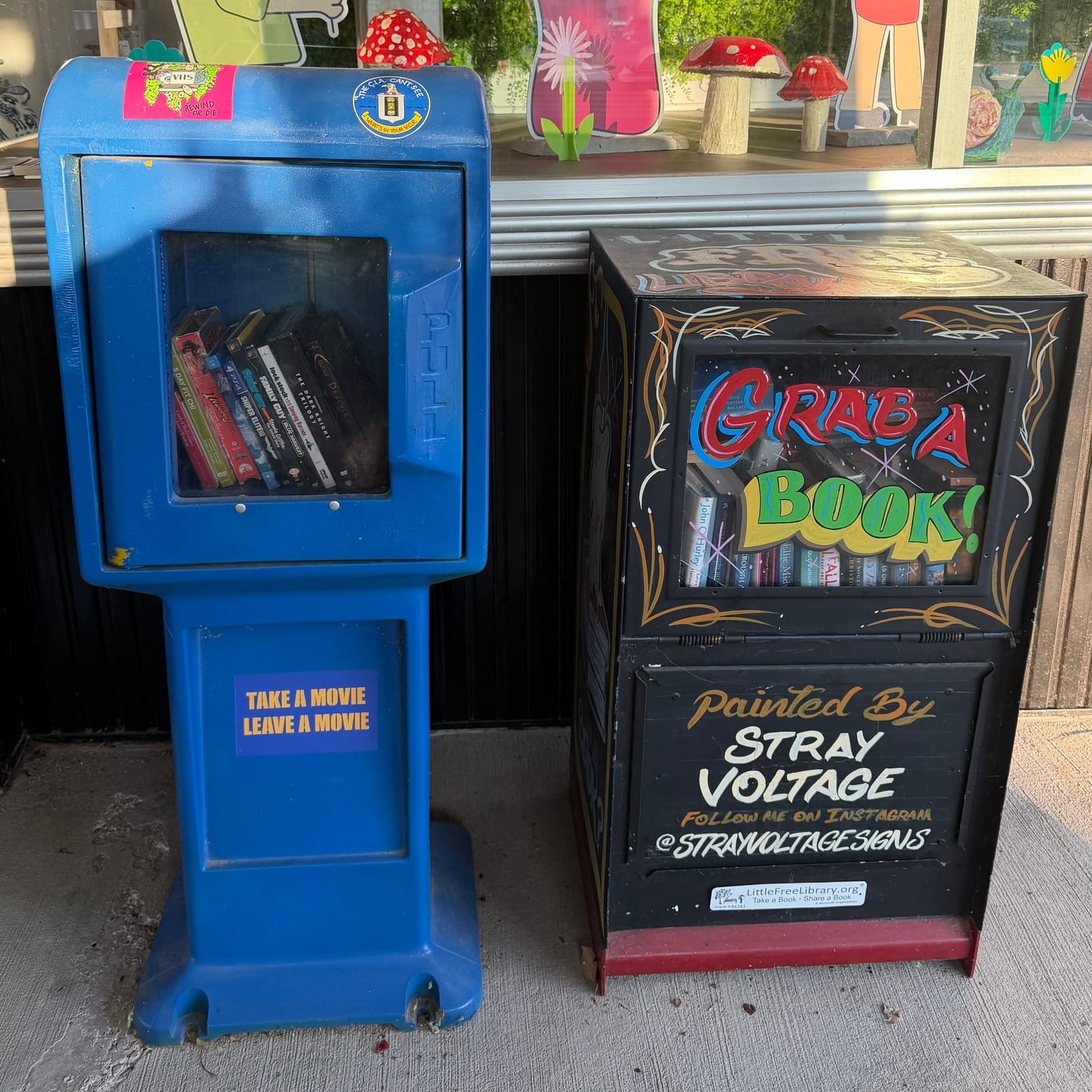
Also, tucked inside the alcove at Odd One Out in downtown, North Carolina’s first Free Blockbuster gives people a place to borrow movies for free, return them when they’re done, or leave another one behind for someone else.
None of these boxes will solve insecurity or scarcity on its own. But together, they help fill some of the small gaps that can make everyday life harder: an empty pantry, an unexpected period, a bag of pet food that ran out too soon, a child without a new book, or a family looking for a free movie night.
They also sit alongside some of the wonderful, larger organizations doing the heavy lifting every day. Clayton is fortunate to have dedicated food banks like From Jesus With Love and Clayton Area Ministries serving local families, as well as a pay-what-you-can mobile market that visits North Fayetteville Street every Monday with fresh, affordable groceries.
Food. Books. Art Supplies. Hygiene products. Pet food. Movies.
Way different needs, met in different ways, by people who decided that their neighbors shouldn’t have to go without.
Clayton has created a growing network of places where people can take what they need, leave what they can, and help one another without making a big production out of it.
Sometimes community care looks like a major program.
Sometimes it looks like a little box with an unlocked door.
Here’s a list of some of the boxes located here in Clayton. If you can, drop something off at one this weekend.
Blessing Boxes
Clayton Fire Station - 325 W Horne St
Clayton Fire Station #2 - 800 NC 42
Archer Lodge Fire Station - 6483 Covered Bridge Rd
First Baptist Church - 411 N Fayetteville St (Box is on the Hinton St side)
Main Street Community Garden - 439 E Main St
Generation Church - 510 W Main St
Clayton High School - 600 S Fayetteville St
Christ the King Church - 1082 Amelia Church Rd
Cooper Academy - 849 Mial St
West Clayton Elementary - 1012 S Lombard St
Pet Pantry
Roxie Daizy Pet Salon - 113 East First Street
Period Pantry
The Station - 231 E Second St
Little Free Libraries
Odd One Out - 400 E Main St
Main Street Community Garden - 439 E Main St
Clayton Area Ministries - 780 Durham St
Clayton Community Center - 715 Amelia Church Rd
West Clayton Elementary - 436 Veterans Parkway, Clayton, NC
Archer Lodge Community Center - 14009 Buffalo Rd
Little Free Art Library
ARTmosphere Community Arts Center - 3919 Raleigh Rd
Free Blockbuster
Odd One Out - 400 E Main St

Tipline/Subscribe/Share
Got a tip, event, question, concern, or weird little Clayton thing we should know about? Send it to The Dispatch.
Not subscribed yet? Join the list and get The Weekender in your inbox every Thursday morning.
Already subscribed? Help us grow by forwarding this to a friend, sharing it on social, or sending it to that one person who always says, “Wait, when did that happen?”