The Weekender: Boxed In

Good morning, Clayton.
This week, you’re going to learn way more about shipping-container code than you ever thought you’d need to know.
But it’s not really about shipping containers.
It’s about what happens when a small business owner inherits a problem, tries to follow the process, and still ends up trapped in a system that simply isn’t working. It’s about how a town rule can be technically correct but practically clunky. And it’s about whether Clayton is making it easier or harder for people to do business here.
Last week, we had a sewage spill — and I apologize for not warning everyone about the “50 moving trucks full of turds” mental visual before breakfast.
This week, we have one lone storage container.
Nobody can say The Weekender doesn’t have range.
Let’s get into it.
The Dispatch Lead
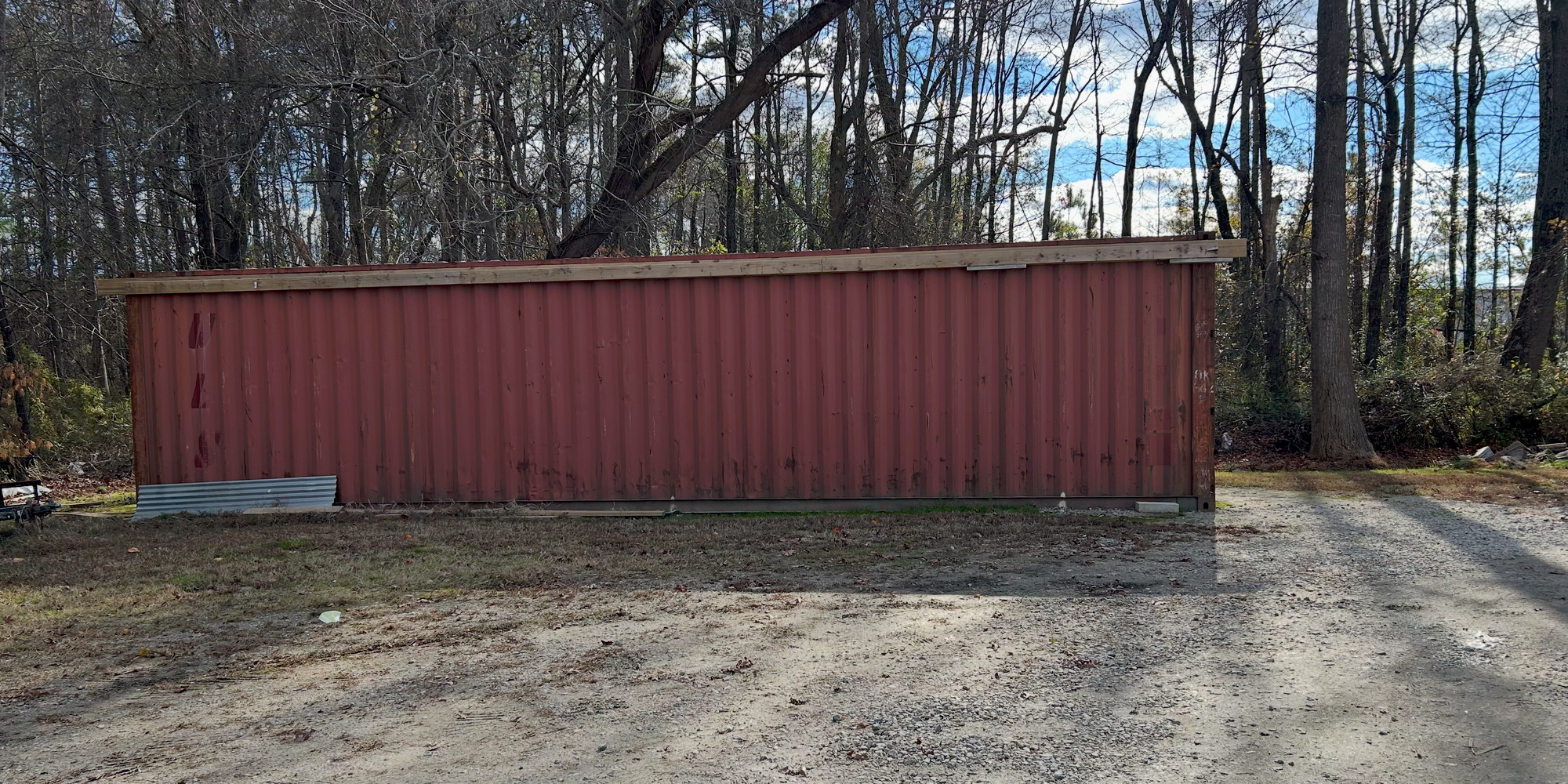
A Storage Container Violation. A Process That’s a Problem
This past Monday night’s Planning Board meeting brought what may be the conclusion of an epic saga involving a business owner who died unexpectedly, a storage container, a frustrating town process, and a new business owner who got the short end of the stick.
There’s no real dispute that the storage container is in violation, at least under Clayton’s recently adopted Unified Development Ordinance (UDO). The Board of Adjustment upheld the town’s notice of violation back in April. The new business owner, Ritchie Schacher, has accepted the decision. He is emptying the container and arranging for its removal.
But just because the legal question is settled doesn’t mean the larger questions have been answered.
The more you follow this story, the less it looks like a simple code enforcement case and the more it looks like a small business owner getting trapped in a process that even the town seems to know is not the best policy.
Schacher did end up getting part of what he wanted on Monday night, when the planning board voted to ask staff to develop possible standards and a possible UDO text amendment that could allow storage containers in permanent scenarios if they comply with the North Carolina Building Code.
In plain English, the town may now explore creating a path for exactly what Mr. Handyman was accused of having.
Too bad it will have come too late for the person who helped make the conversation happen.
Schacher, the new owner of Mr. Handyman, told The Dispatch he is complying with the town. But after months of emails, hearings, public records, and attempts to understand what happened before he bought the business, he is frustrated.
“If I could pick up and move my business outside of Clayton, I would do it right now,” Schacher said.
Not exactly the quote you want from a local business owner in a town that says it desperately needs economic development. And it adds to Clayton’s growing reputation as a town that is unnecessarily hard to do business with.
What Happened Monday Night
This week’s planning board meeting wasn’t supposed to be a hearing. The Board of Adjustment had already handled that part.
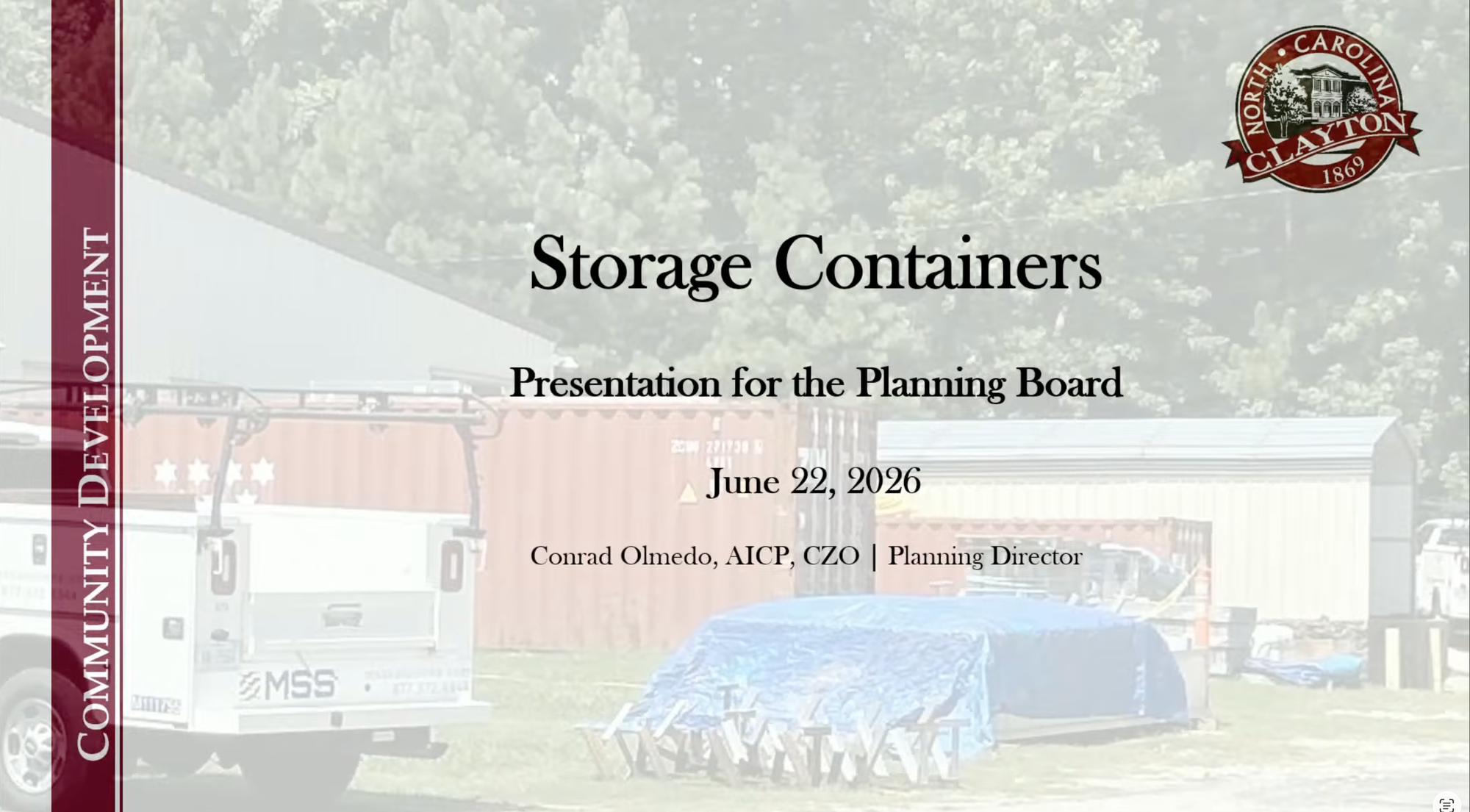
Instead, planning director Conrad Olmedo gave the board a presentation on storage containers: where they typically appear, how the town regulates them, why they raise concerns, and what options the town could consider.
The presentation made a few things clear.
Storage containers are not rare. Town staff identified 21 observations of them around Clayton. They show up on residential, commercial, industrial, construction, research and development, and even town-owned properties.
They’re also not imaginary problems. There are definitely some real concerns: debris and trash, unscreened outdoor storage, unpermitted footings, stacked containers, taking up parking spaces, to name a few.
But there’s a clear solution for all of those concerns: reasonable standards.
Setbacks. Screening. Anchoring. Safety precautions. No unpermitted modifications. No junk piles spilling out around them.
That’s a permitting path. Not a rigid, complicated policy.
The town’s presentation did lay out this middle-ground option. One that would continue treating some containers as temporary uses, but would also modify the UDO to allow storage containers as permanent secondary uses if they meet the NC Building Code and town standards.
This is basically what Schacher and David Stewart — the previous owner — have been asking for.
Not a no-holds-barred free-for-all apocalyptic junkyard storage container loophole.
A limited, regulated path for outdoor storage in an industrial district.
This isn’t Somebody’s front yard.
It’s also worth saying plainly where this business is located.
Mr. Handyman isn’t trying to keep a shipping container in Glen Laurel, some fancy schmancy neighborhood, or any residential neighborhood at all.
The office is on Best Wood Drive off of Powhatan Road, in Clayton’s industrial corridor, surrounded by industrial uses and located right around the corner from Novo Nordisk’s Ozempic factory. Arguably, the least aesthetically pleasing structure in all of Clayton and its Extra-Territorial Jurisdiction (ETJ).
That’s important because of the land-use context.
A shipping container behind a business in an industrial area is not the same thing as a shipping container dropped beside a ranch house. A container used to store ladders, lumber, tools, materials, and equipment for a handyman and repair business is not the same thing as a junk pile spilling into a neighborhood street.
If the town wants to draw lines, draw them.
Draw the line at residential neighborhoods. Draw the line at visibility. Draw the line at fire access. Draw the line at hazardous materials. Draw the line at setbacks, screening, anchoring, and stormwater.
But pretending there is no practical difference between industrial storage and neighborhood clutter is exactly how a code becomes disconnected from real life.
It becomes more about protecting the code than solving the problem.

Last Friday in Clayton: Downtown Summer Nights
Kick off summer in Downtown Clayton on Friday, June 26, with live music, pop-up shops, local specials, and the first Downtown Clayton Art Walk in partnership with Clayton Visual Arts.
Shops will be open late, artists will be out on the streets, and downtown will be full of reasons to wander, shop, eat, sip, and stay a little longer.
Make a night of it.
The Town Uses Them, Too
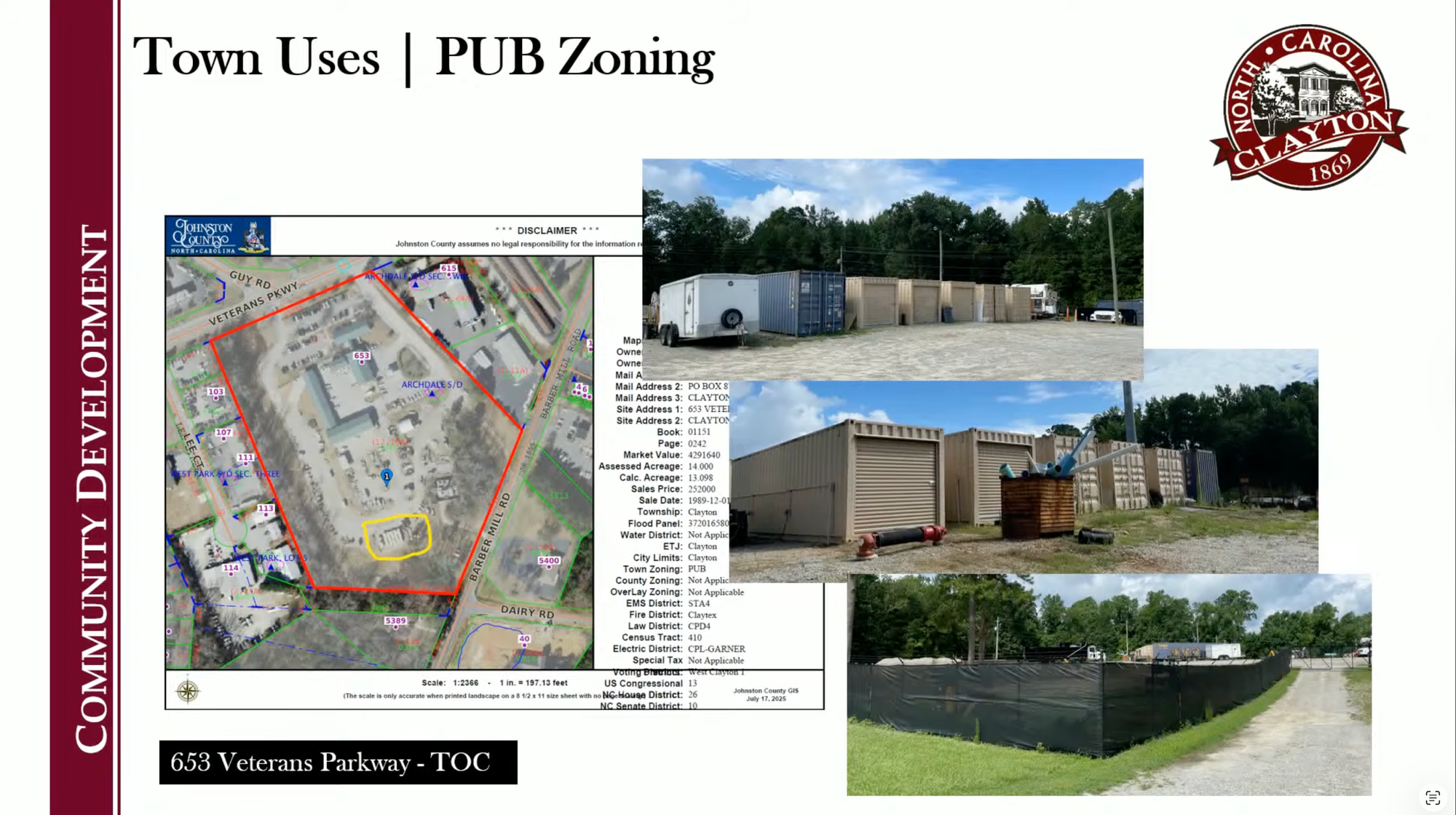
One of the more telling slides in the town’s presentation showed permanent storage containers at the town’s own operations facility on Veterans Parkway. According to a former town employee, these containers have been here since at least 2019 and are all wired for electricity.
I mean…
If storage containers are useful enough for the town’s operations, it’s hard to argue they are inherently incompatible with industrial work.
The town’s own use of containers is an acknowledgment of what every contractor, mechanic, landscaper, maintenance shop, and industrial business already knows: sometimes you need secure, weather-resistant storage that doesn’t require building a new structure from scratch.
Whether these units are “grandfathered” under the old United Development Code or not, it still makes the town’s position harder to explain to a small business owner who relies on this unit for practical storage.
Not to mention, Clayton is a town where taxes, utility bills, and the cost of doing business here keep going up; it’s fair to ask whether this is the best use of everybody’s time.
How much staff time has now gone into one container behind one business in an industrial area?
How many emails, meetings, presentations, appeals, public records, staff reports, inspection conversations, and board discussions?
Out of all the issues facing a fast-growing town like Clayton, this is the one that rose to the level of a multi-board civic saga?
Out of all the cans in the terminal, that’s the one you lose in the stacks? – Detective Jimmy McNulty
The container issue didn’t start with Schacher.
It started with David Stewart, the previous owner of the business. Stewart had been communicating with the town about the container and appeared before the Planning Board in May 2025 to request more flexibility.
At that time, the Planning Board appeared sympathetic. The discussion was not a formal approval. The board could not simply bless the container on the spot. But the direction seemed clear enough: staff should look for alternatives and consider whether the town’s rules needed to change.
Then Stewart died unexpectedly.
Schacher had purchased the business in March 2025. He knew there was an issue days before closing, but says Stewart told him he was handling it. After Stewart’s death, Schacher was left trying to reconstruct a process he hadn’t started, based on records he didn’t have, while trying to run a business he’d just bought.
Schacher said it best:
“I inherited this mid-process and blind.”
That line is the heart of the matter here.
Because Schacher didn’t drop a container on the property and dared the town to do something about it. He bought a business, inherited its assets, inherited its problems, and then tried to figure out what the town wanted from him.
What he found wasn’t a clear path.
He found options that changed depending on which part of the process he was in: remove it, appeal it, seek a temporary permit, explore a building-permit path, pursue a text amendment, or build something else.
By the time the issue reached the Board of Adjustment, the question had narrowed to one thing: whether the town correctly issued the violation under the current UDO.
The answer was yes. But, again, it didn’t really solve anything. It didn’t create a better policy. It didn’t give future business owners a clearer path. It didn’t answer why a storage container behind a business in an industrial area should be treated the same as one somewhere it clearly doesn’t belong.
What it did do was make one small business owner’s life harder and his business more expensive to operate.
The Planning Board Wasn’t an Attempted Workaround
There was also an unfair frame placed on Schacher’s appearance before the Planning Board earlier this week.
Planning Board Chair Jodie Dupree said he didn’t think the board should serve as a second line of defense for someone unhappy with the Board of Adjustments decision.
That would be a reasonable concern if Schacher had been asking the Planning Board to overturn the Board of Adjustments.
That’s not what happened here.
The Board of Adjustments had one narrow job: to decide whether town staff correctly issued the Notice of Violation under the current UDO. It did that. The violation was upheld.
Schacher’s return to the Planning Board was about something different.
He was asking the board to consider whether the rule itself should change going forward.
That’s not a workaround. That is the process.
If the Board of Adjustments says, “Our hands are tied because this is what the ordinance says,” then the next logical question is whether the ordinance still makes sense.
That question belongs with the Planning Board and Town Council.
And by the end of the meeting, that’s where the board landed anyway. The Planning Board voted to ask staff to develop possible standards and a possible UDO text amendment for storage containers in designated zoning districts, including Light Industrial.
So Schacher wasn’t trying to sneak around the process. He was following it to the next stop.
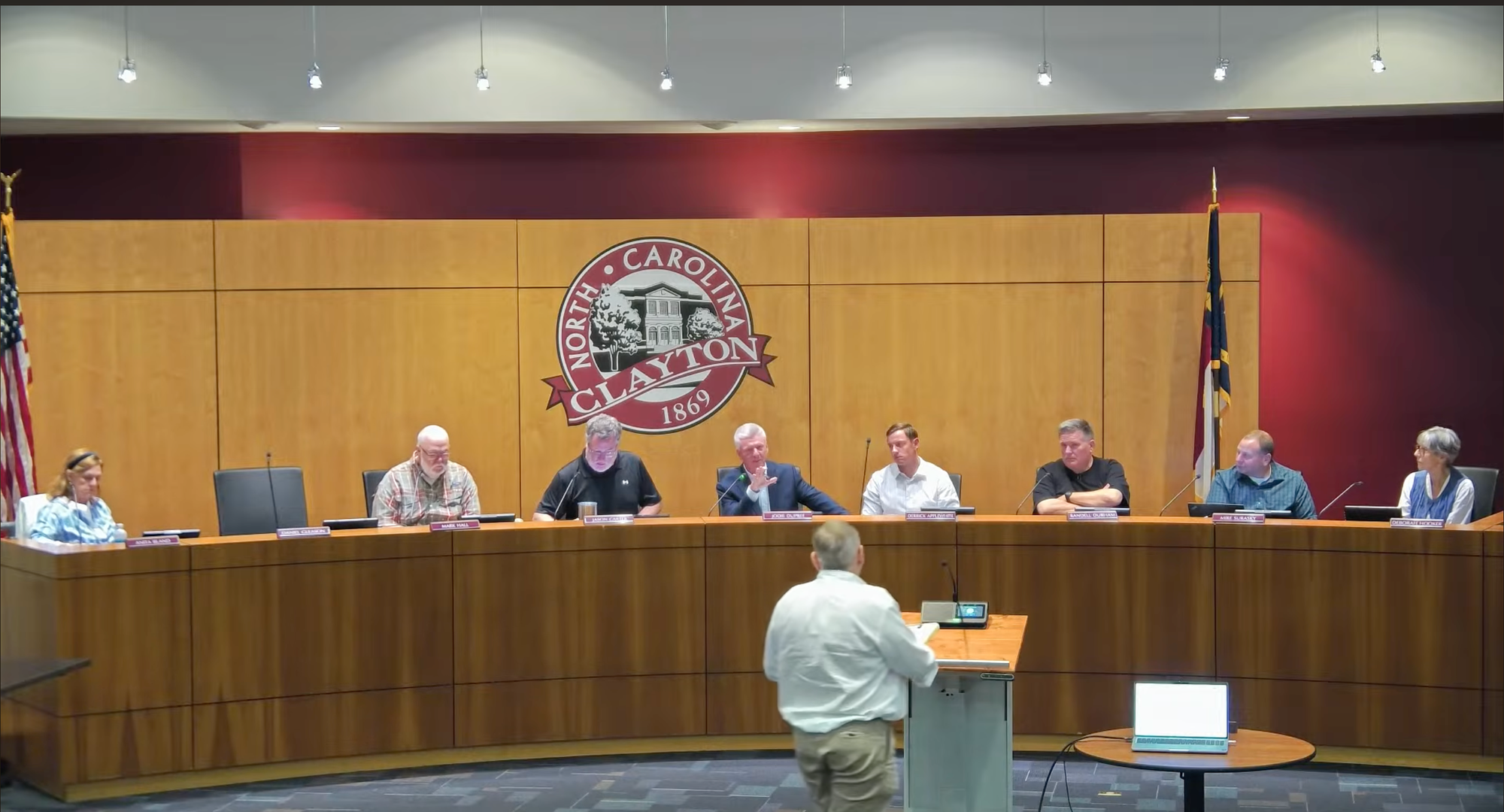
Too late for this business owner
That is the part that feels off.
Schacher still has to remove the container.
The town may eventually create a path for the same kind of use. Other business owners may benefit from standards that emerge from this process. Future applicants may know what to do.
But the person who inherited the mess, spent months trying to understand the process, and kept pushing the issue through the public record is the one left carrying the consequence.
That doesn’t mean the town acted illegally. It does mean the town’s process, once again, didn’t produce a practical result.
And for a business community that already perceives Clayton as difficult to work with, this case doesn’t help.
That perception is already out there. Ask around long enough, and you hear it from builders, small business owners, property owners, and people who have tried to get something done here.
Clayton is growing. Clayton says it wants investment. Clayton celebrates ribbon cuttings and economic development wins.
But economic development isn’t just landing the big fish.
It’s also whether the small business owner feels like the town is trying to help them solve a problem or simply waiting for them to run out of options.
Small businesses don’t have planning departments. They don’t have in-house counsel. They don’t always know the difference between a temporary use permit, a building permit, a variance, an administrative appeal, and a UDO text amendment.
They just know whether the process feels navigable.
This one did not.
A box is not always a blight
The town’s staff recommendation is to keep supporting storage containers as temporary uses and encourage building additions or detached structures instead.
There’s certainly logic to that. A real building can be reviewed, permitted, inspected, taxed, and tracked. It’s cleaner from a planning perspective.
But not every business problem needs a permanent building.
A handyman business needs to store ladders, lumber, tools, equipment, materials, seasonal supplies, and the oddball things that come with repair work. A public works department needs to store temporary street signs, bulk materials, equipment, and storm-response supplies. A contractor needs flexibility. A small industrial business may not have the cash to build a new building whenever it needs more storage.
That is why these containers exist in the first place.
They’re efficient.
They’re useful.
The question shouldn’t be whether a shipping container is pretty. The question should be whether it’s safe, screened, properly placed, properly used, and located in a zoning district where that kind of storage makes sense.
This is where Clayton’s development services process seems to struggle. Too often, the answer appears to be: the code says no, so no.
But a growing town needs more than enforcement. It needs problem-solving.
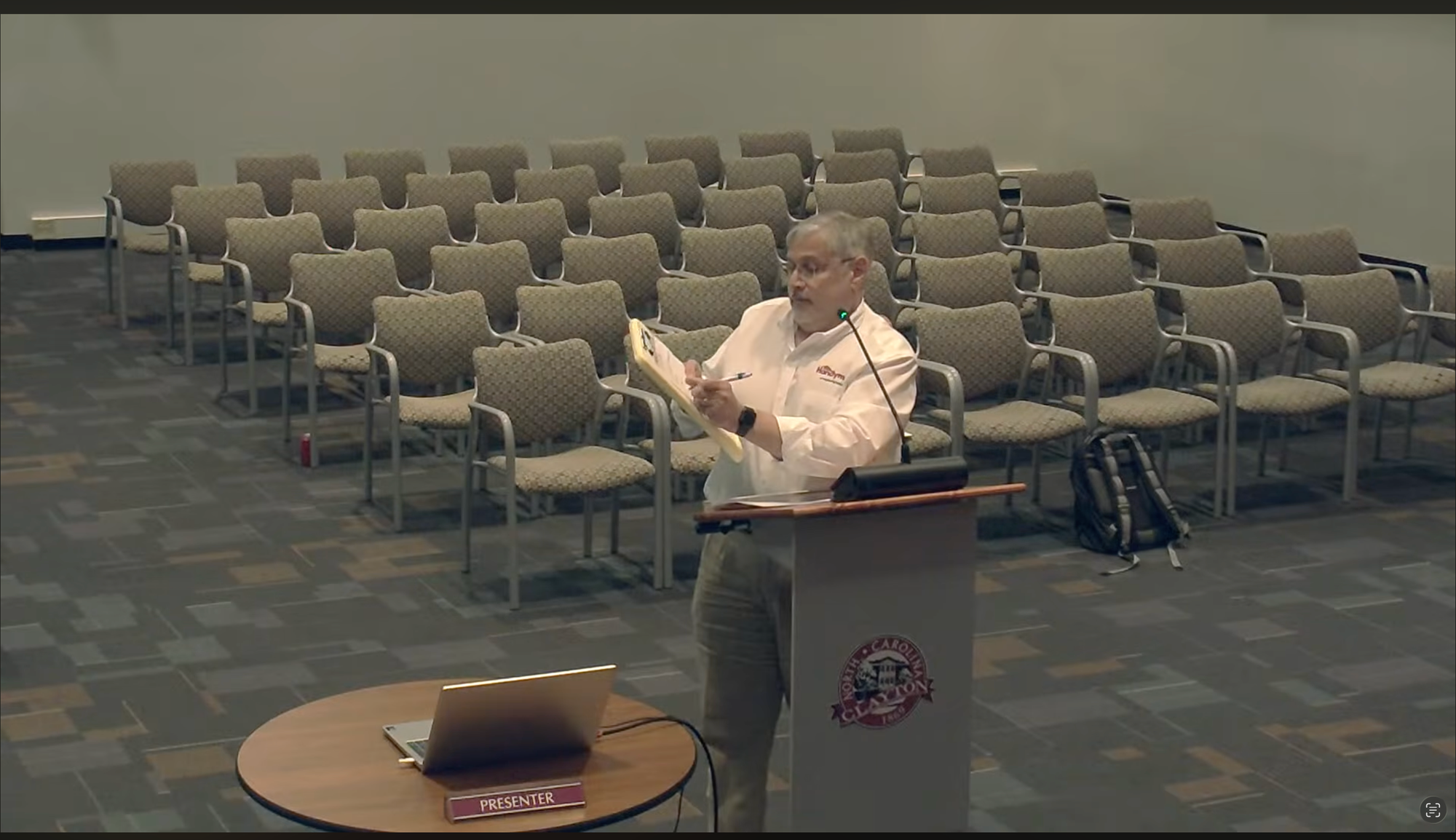
This Ain’t an HOA
Clayton for sure needs rules.
There should be rules for safety, rules for fire access. Rules for hazardous materials. Rules for setbacks. Rules for stormwater. Rules for screening. Rules for what belongs in a residential neighborhood versus what belongs in an industrial district.
But there is a difference between protecting the public and policing taste.
This is America. We don’t live in an HOA.
Local government should be very careful when land-use rules slide from safety and compatibility into aesthetics and preference.
A screened, permitted, code-compliant storage container behind a business in an industrial district is not the same thing as someone dropping a rusted box in a front yard.
The town’s job should be to make the rules clear, enforce them evenly, and create practical paths to compliance.
In this case, the path came too late.
And the message to a small business owner was not “let’s solve this.”
It was closer to: remove the container now, and maybe we will figure out the rule later.
That may be legal. But it’s hard to call it business-friendly.
Town Hall Watch
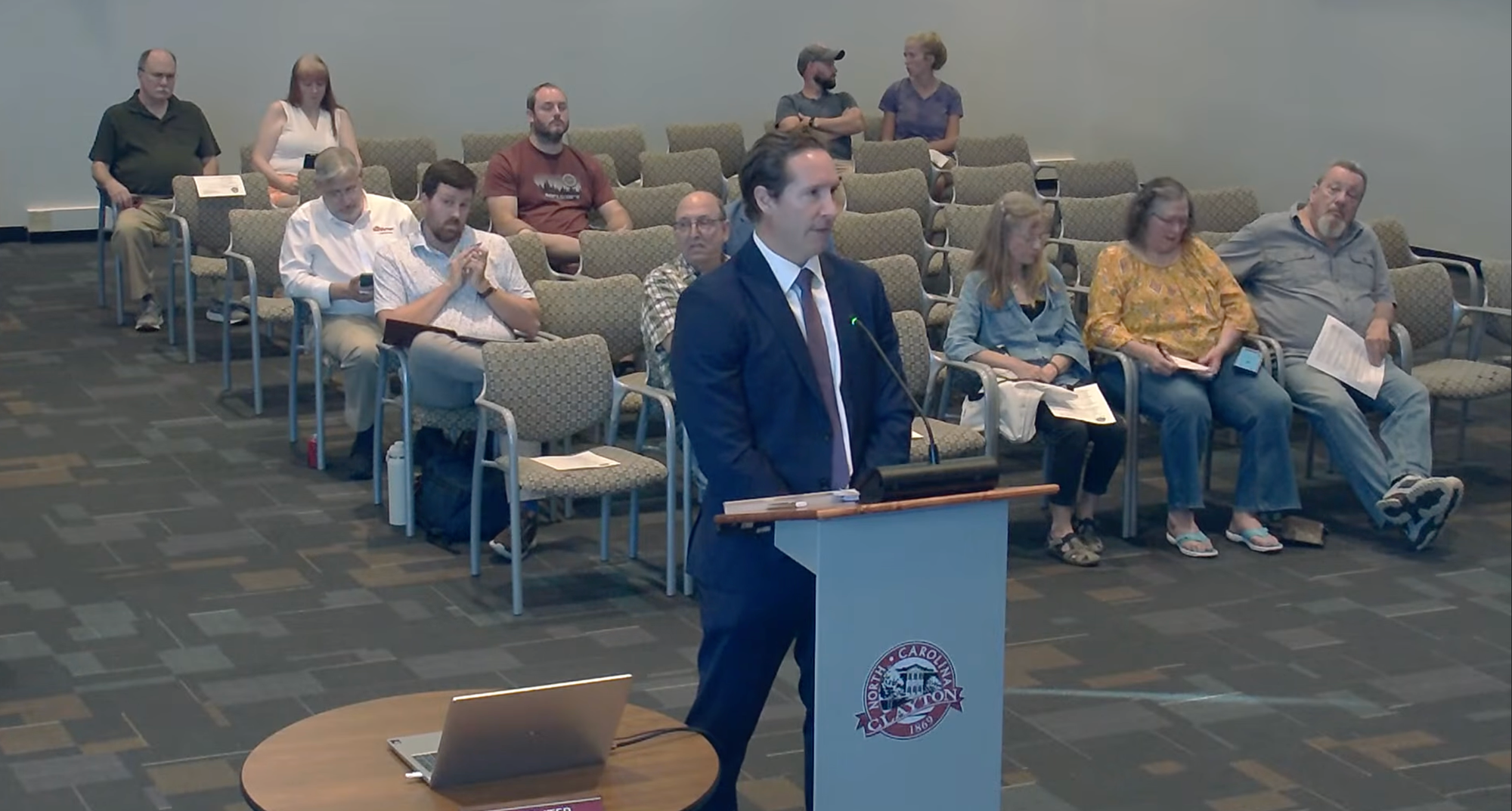
Planning Board Says No to Stotan Crossings
The Planning Board voted Monday night not to recommend approval of Stotan Crossings, a proposed industrial project off Guy Road near Golden Nugget Drive.
The request would bring roughly 43 acres outside Clayton’s town limits and ETJ into town through annexation and rezone the property from Wake County Residential-30 to Clayton’s Conditional Industrial zoning district.
The concept plan calls for a two-building speculative industrial park for light manufacturing and warehouse distribution. The traffic study assumes up to 376,480 square feet of general light industrial space.
So, not exactly a little flex building with a roll-up door.
There were plenty of fair questions from the board and nearby residents: traffic on Guy Road, the distance to existing water and sewer infrastructure, buffers near nearby homes, what kind of tenants could eventually locate there, and whether the town should annex industrial land that is not currently inside Clayton’s planning jurisdiction.
All real concerns.
But here’s the other side of it: something’s going to happen in this corridor whether we like it or not.
With 540 changing the regional map, Highway 70 nearby, and the west side of Clayton poised for future growth, this land is unlikely to remain untouched forever. The question isn’t really whether development is coming. The question is what kind of development Clayton wants to prepare for.
And honestly, industrial or commercial development may be the least painful answer for the town’s long-term finances.
Clayton’s spent the last couple of decades growing mostly through rooftops. More houses bring more people, more traffic, more school pressure, more park demand, more public safety demand, and more infrastructure needs. Residential growth is not free. It often costs more to serve than it brings back.
The town said as much in response to questions from The Clayton Dispatch. Clayton’s tax base is roughly 80 percent residential and 20 percent non-residential, and town officials said that imbalance is not sustainable at the current pace of growth.
That's the case for projects like this.
A healthier tax base needs more than subdivisions. It needs employment land. It needs commercial property. It needs industrial users who help pay into the system without creating the same service burden as hundreds or thousands of new homes.
That doesn't mean every industrial project should get a rubber stamp, and there's still plenty of questions with this project.
Jason Carter asked how far the property is from existing water and sewer. The town said the closest gravity sewer line is roughly 1.75 miles away, with the applicant responsible for the extension.
Randell Durham asked whether there had been discussion about widening Guy Road. Town staff pointed to guidance in the Comprehensive Transportation Plan and the project’s traffic-related conditions.
Derrick Applewhite asked about the possibility of a data center. The $64,000 question. The town’s answer at the meeting was basically: possible, but not likely.
The data center question matters because those projects have become a public concern in fast-growing areas. They can bring investment, but they can also raise major questions around water use, energy demand, noise, visual impact, and infrastructure capacity.
The town told The Dispatch that Clayton does not currently have sufficient utility capacity, particularly electric and water/sewer infrastructure, to support a high-demand user like a data center. Staff also said they plan to bring the data-center issue to the Town Council at an upcoming work session for clearer policy direction, and that future UDO changes may be considered to more formally define and regulate data centers.
Worth watching.
Because if Clayton wants industrial growth, it also needs to be honest about what kind of industrial growth it wants.
Light manufacturing, warehouse, distribution, research, labs, contractor services, and similar employment uses are one conversation.
High-demand data centers are another.
For now, the Planning Board’s answer to Stotan Crossings was no. The final decision still belongs to Town Council.
But still, if Clayton doesn’t want this kind of industrial project on Guy Road, then what does it want there?
More rooftops?
More pressure on services?
More residential growth in a town already trying to figure out how to pay for the growth it has?
It’s completely fair for nearby residents to be concerned about traffic, buffers, noise, lights, wells, and what this does to the character of their road.
It’s also fair to say that Clayton needs places for employment-generating development, and the Guy Road/Highway 70 corridor is one of the more logical places for that conversation to happen.
Planning Board pumped the brakes.
Town Council now gets to decide whether this project is too much, too soon — or whether this is the kind of non-residential growth Clayton is going to need if it wants to keep the tax base from leaning even harder on homeowners.
No Town Council Meeting Next Week
Town Council gets their normal break for July 4th, so no updates from most of the council. Stay tuned though, because we'll be publishing our first one-on-one interview with council member Amanda Underwood.
Downtown Dispatch
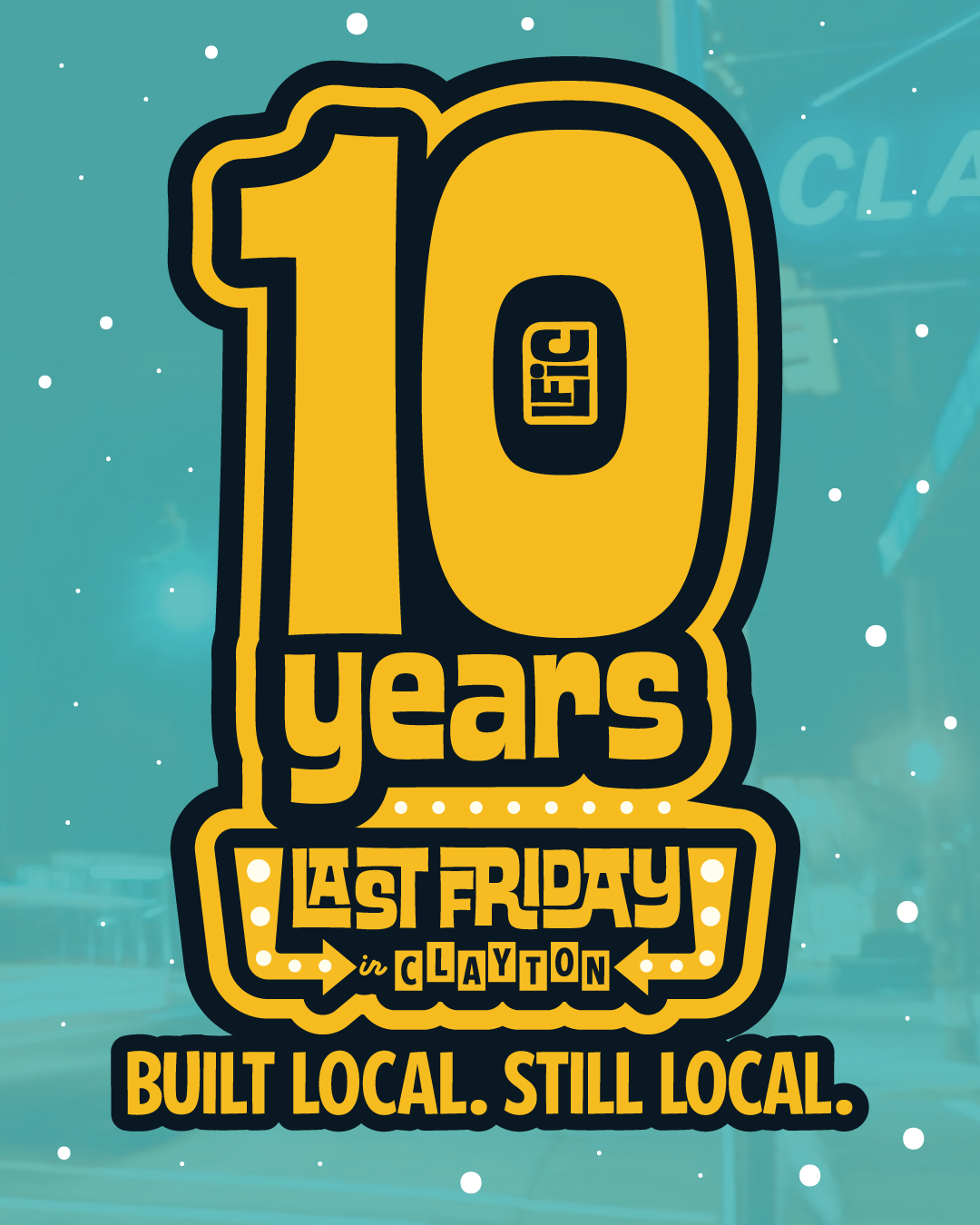
Last Friday Is Back This Week
Enjoy a summer night in Downtown Clayton this Friday.
Last Friday in Clayton returns with pop-up markets, dinner specials, the Downtown Clayton Social District, and the LFiC Art Walk with Clayton Visual Arts.
Think Downtown: grab dinner, walk around, shop local, carry a drink through the Social District, and see what local artists and downtown businesses have going on.
If you’re new to Last Friday, it’s one of those nights that works best when you don’t overplan it. Start with dinner, follow the music, stop into a few shops, check out the art, and see where the night takes you.
Downtown summer nights are here.
Check out our Last Friday picks in the next section.

Young Yogis Summer Youth Yoga Camp is Coming
Purna Yoga East will host Young Yogis, a summer yoga camp for kids ages 5–11 focused on movement, creativity, yoga, and mindfulness. The camp will be led by Maya and Ella, two sisters who are both aspiring teachers. The July 6–10 camp is for ages 5–7, and the July 20–24 camp is for ages 8–11. More information is available at purnayogaeast.com.
WEEKEND PICKS
A quick rundown of what’s happening around Clayton this weekend. Music, markets, food, family stuff, and anything else worth leaving the house for.
The Dispatch Last Friday Picks

The Magnolia Inn | 507 E 2nd St
Candlelight Social w/ Live Music | 8pm - 10pm
The Magnolia Inn will host a Candlelight Social during Last Friday in Clayton, with live music from accordion player Kevin Lawrence in a cozy, candlelit setting. The event is free and drop-in style, with wine, beer, and light fare available for purchase. Timed entry helps the venue stagger attendance throughout the evening.
Three Little Birds | 225 E Main St
Last Friday Warehouse Sale | 2pm - 8pm
The Market at Three Little Birds will host a Last Friday Warehouse Sale with 50–75% off select items, closeout furniture, and seasonal clearance finds. Stop by while you’re downtown and see what you can snag before it’s gone.
Odd One Out | 400 E Main St
The Blue Collective and 4Track Pop-Up Record Store | 6pm
Odd One Out will host The Blue Collective, a family of creative artists and musicians bringing art, interactive displays, and live music to Last Friday. Around the corner, 4 Track Records & Music will be set up with a pop-up full of well-priced records. Also making her debut is Leina, one of Clayton’s favorite BLVD baristas, with her new crochet business featuring adorable handmade crochet stuffies.
Downtown Clayton
LFiC Art Walk with Clayton Visual Arts | 6pm - 9pm
Take a stroll through downtown Clayton during Last Friday and check out work from talented local artists along the way. Start at Heart2Hands Art Gallery, make your way down Main Street, stop by The Station for a caricature, then end the walk at Right Angles Framing & Art. Grab a Social District drink along the way and make a night of it.

Saturday
Artmosphere Community Arts Center | 3919 Raleigh Rd
Slab-Built Birdfeeder Class | 10am - 12pm
Get your hands dirty at Artmosphere with a slab-building clay class for adults and teens 16 and up. Students will build and decorate a stoneware birdfeeder, with instruction provided throughout the class and a variety of glazes available. The finished piece will be ready for pickup after firing. The class is $55, and all experience levels are welcome.
The Barn House | 3268 Barber Mill Rd
JoCo Fizz Co | 9am - 3pm
If you haven’t stopped by The Barn House yet, consider this your sign. JoCo Fizz Co. will be popping up Saturday with handcrafted sodas to sip while you shop. The Barn House has also been stocked with local favorites lately, including fresh blueberry cobbler, produce, pickles, baked goods, honey, peanuts, and more.
Revival 1869 | 222 E Main st
Latin Jazz by Los Gatos | 8pm
Revival 1869 will host Los Gatos on Saturday night, bringing Latin jazz to downtown Clayton. Grab a cocktail, settle in, and enjoy an evening of live music in one of downtown’s coziest rooms.
Crescendo at The Station | 231 E Second St.
Live Music by Moontrane | 8pm
Moontrane returns to Crescendo at for a three-hour set of breakbeat, soul, and jazz. Expect a night of groove-heavy live music from a seriously talented group of musicians.
Sunday
Town Square
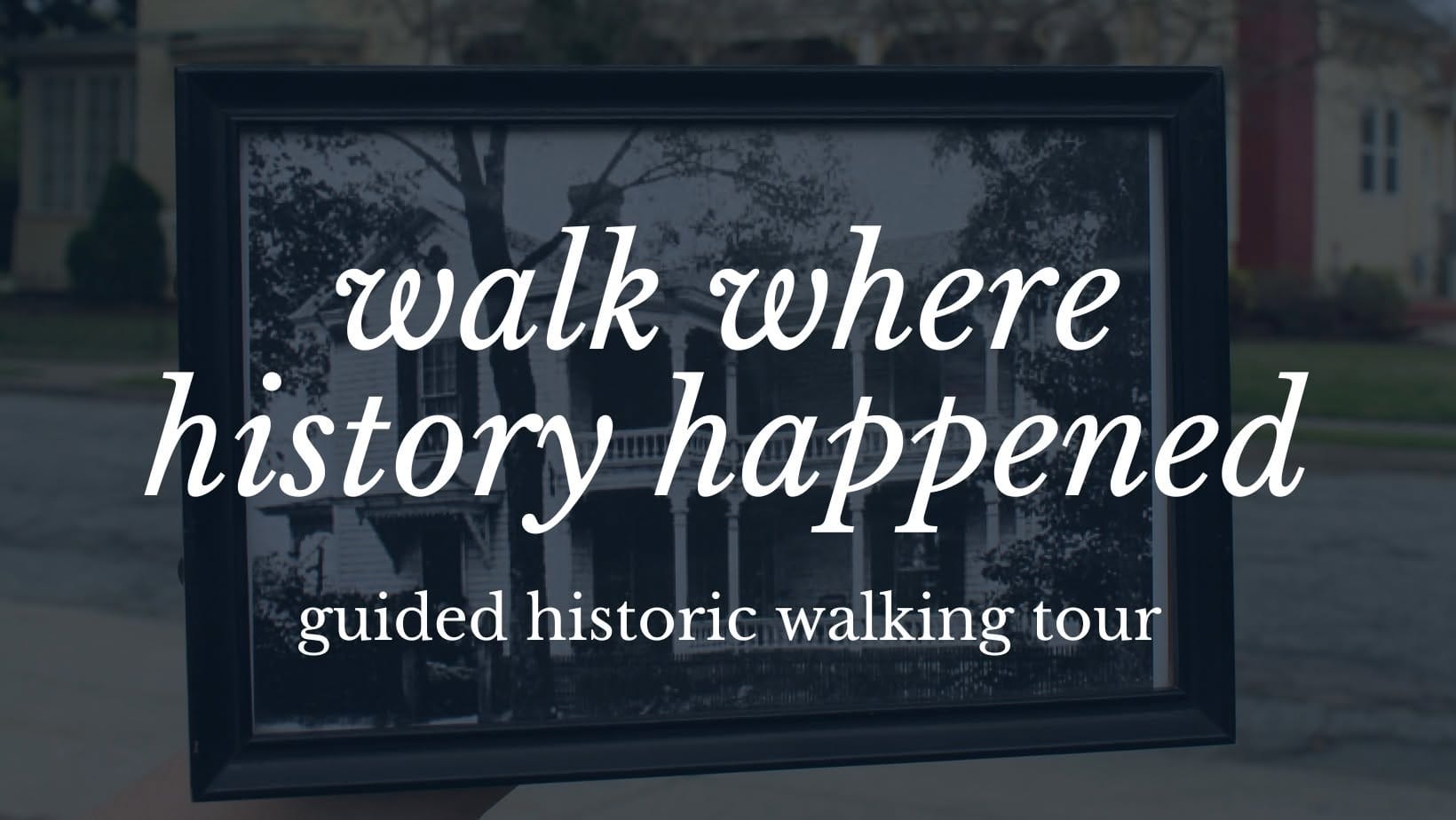
Walk Where History Happened | 6pm
Hocutt-Ellington Memorial Library will host a guided walking tour through historic downtown Clayton, starting from Town Square at The Clayton Center. The 45-minute tour will highlight local landmarks, community stories, and the history that helped shape Clayton. Registration is required, with tour times available at 6 p.m.
Register Here https://townofclaytonnclibrary.libcal.com/event/16839501?register
Triangle Adventures
Downtown Clayton E-Bike Tour | 1pm - 4pm
Triangle Adventures offers a three-hour guided e-bike tour through Clayton, starting at 348 E. Main Street. The ride includes local history, scenic stops, an easy trip onto the Mountains-to-Sea Trail, lunch at a local taco spot, and a fresh margarita at a downtown speakeasy-style bar. New this season, the tour also includes AI-powered digital video storytelling from the perspective of historical figures. The ride is beginner-friendly, with no pedaling required.
One Good Thing
Every week, we're going to try and end on a positive note. Snapshots of Clayton history, local legends, monumental ackomplishments in the community, and more. This section is supposed to make you feel good.
A Summer Film Series is Coming
Dan here — again.
If you know me, you know my love for cinema, and showing people movies is basically my love language. So I’m excited to annoucne that The Clayton Dispatch and my film company, Tasty Film Co., will be showing some movies around Clayton this Summer! We’re giving our normal space for screenings, Rainbow Lanes, the summer off. Instead we will be showing some films in the Main Street Community Garden to try and help them raise some funds to keep the garden going. If you haven’t been to one of our movie parties, they’re a blast! Curated pre-show, our favorite vendors, food, concessions, FUN.
The schedule is as followed:
July 11 - Movies in the Garden - FERNGULLY: THE LAST RAINFOREST (G)

July 25 - Movies in the Garden - MIDSOMMAR (R)

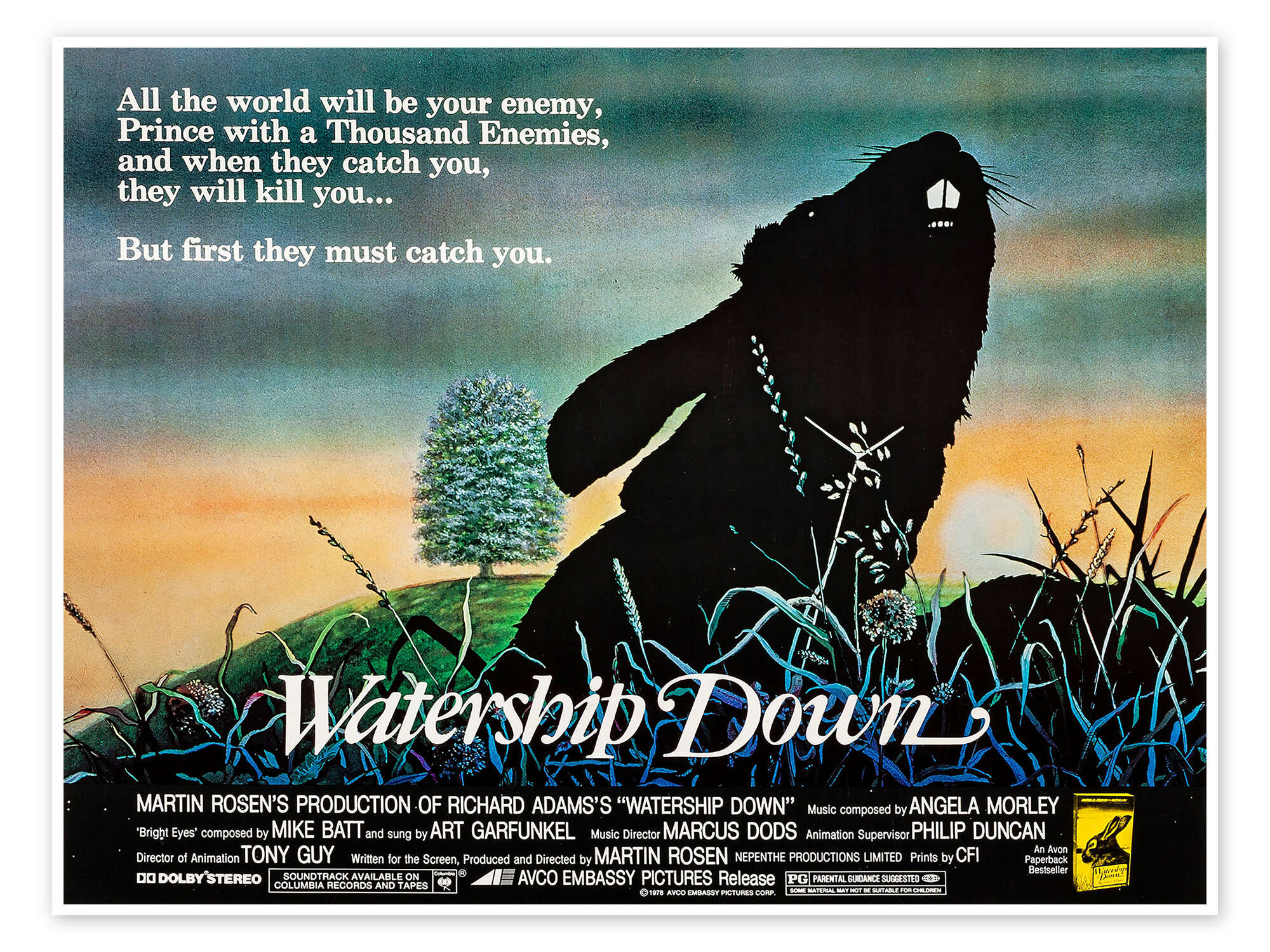
August 8 - Movies in the Garden - WATERSHIP DOWN (PG)
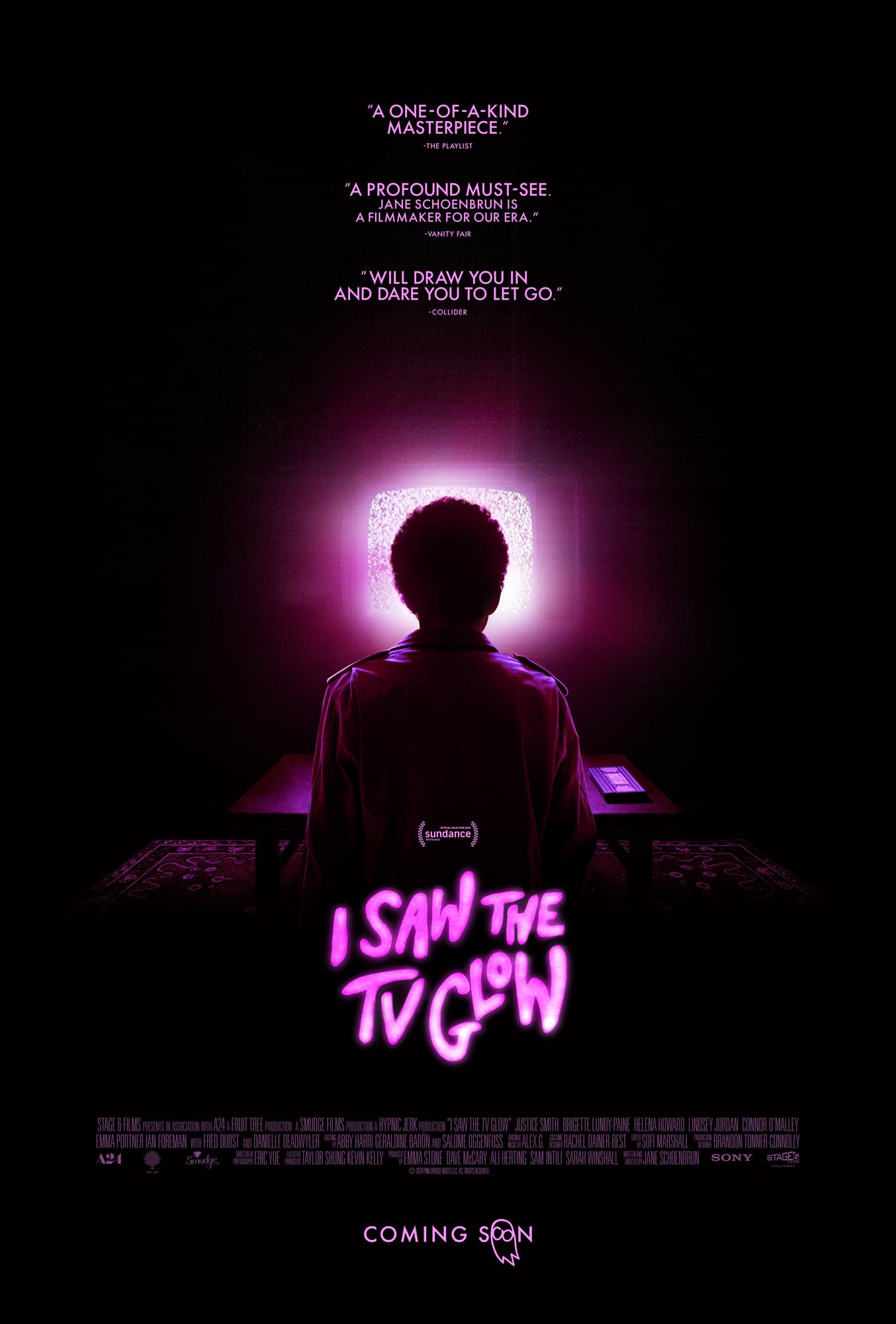
August 22 - Movies in the Garden - I SAW THE TV GLOW (PG-13)
September 5 - Movies in the Garden - Mystery Ripper (Surprise, Family Friendly Movie)

September 19 - Secret Cinema (location TBA) End of Summer Blowout - SLEEPAWAY CAMP (R)
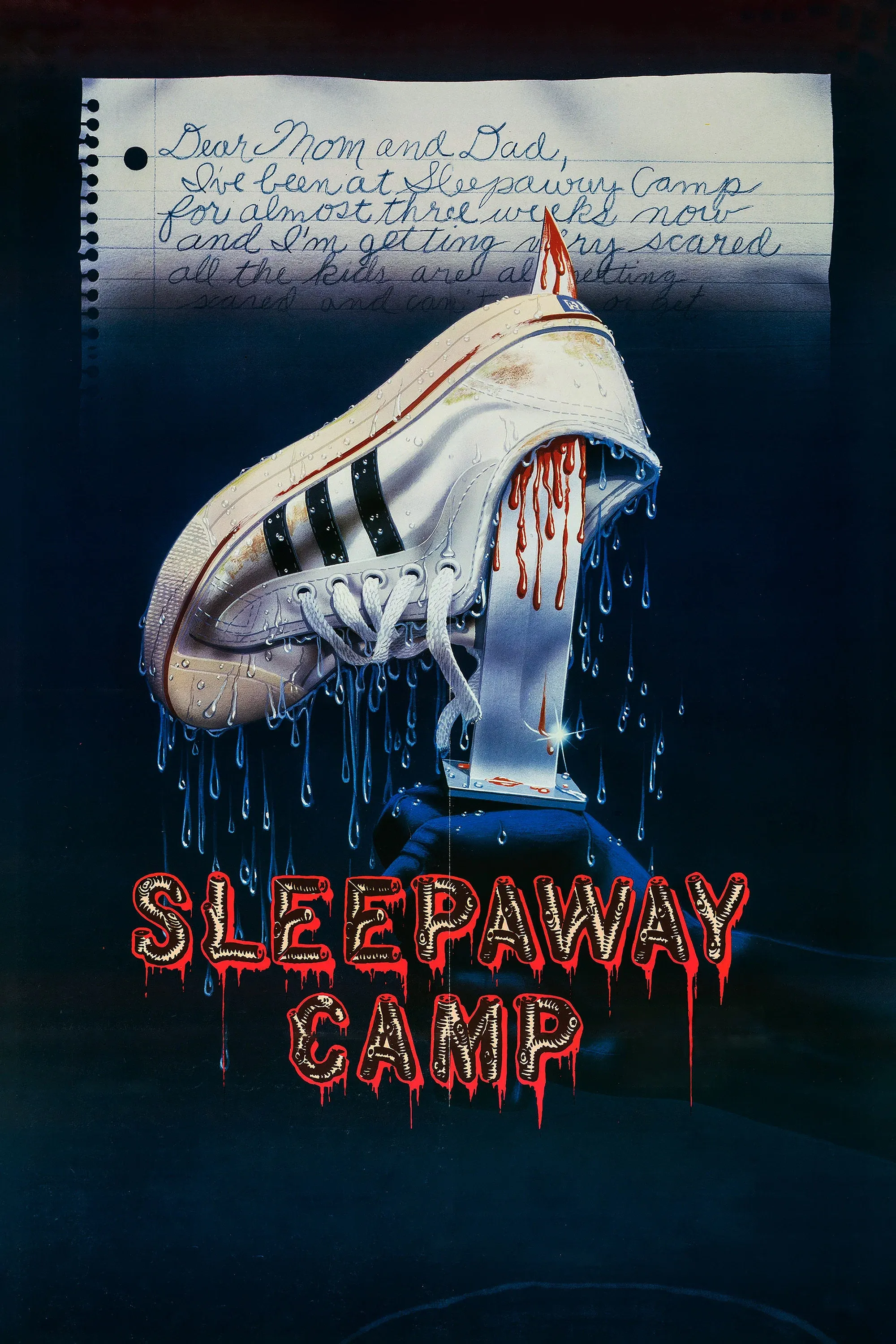
*Dates and titles are subject to change

Suppor The Dispatch
Put your business, event, or organization in front of Clayton readers every Thursday morning. The Weekender reaches people looking for local news, town updates, weekend plans, and things to do around town.
Advertising spots are available now through The Clayton Dispatch.
Tipline/Subscribe/Share
Got a tip, event, question, concern, or weird little Clayton thing we should know about? Send it to The Dispatch.
Not subscribed yet? Join the list and get The Weekender in your inbox every Thursday morning.
Already subscribed? Help us grow by forwarding this to a friend, sharing it on social, or sending it to that one person who always says, “Wait, when did that happen?”