The Weekender: The Downtown Clayton Parking Issue

Good morning, Clayton!
This week, welcome to the hellscape that is the life of every Downtown Clayton business owner: the downtown parking problem.
Yes, I know. Nothing gets the blood pumping quite like a parking study and a town council work session.
But buried beneath the hundreds of thousands of dollars in consultant fees that we’ve paid over the years is a pretty important question that we keep coming back to: Does Downtown Clayton actually have a parking problem, or have we just done an exceptionally bad job at helping people find the parking we already have?
The answer, naturally, is both.
The town’s latest study says parking is generally functioning well. But anyone who goes downtown on the weekend can tell you that most convenient spaces stay pretty packed. Most of the overall parking inventory is privately owned, and visitors are still circling Main Street because the public lots are poorly marked.
This has been a problem that Clayton has studied for roughly 20 years. we’ve paid for plans. We’ve paid for branding. We’ve even paid for wayfinding signs that were never installed.
At some point, we have to stop paying people to tell us what we already know and start cherry-picking the easy stuff, while the big stuff gets worked out or whatever it is they do to get big stuff done. Damned if I know.
We’ll also take a break from municipal frustration to appreciate the ridiculous sunset Downtown Clayton got Monday night, plus a full slate of things worth leaving the house for this weekend.
Let’s get into it.
The Dispatch Lead: The Downtown Clayton Parking Issue
The town’s latest parking study says that downtown parking is functioning well. The problem is where the spaces are, who owns them, and whether Clayton can count on them remaining available.
Downtown parking was the main event at Monday’s Town Council work session.
Walker Consultants presented its parking study to council in June. Since then, town staff has spent several months comparing its findings with recommendations from Clayton’s previous downtown master plans, transportation plans and a parking study completed nearly 20 years ago.
On Monday, staff returned with a two-page priority list intended to answer a familiar question:
What, exactly, should Clayton do about downtown parking?
Walker counted more than 2,000 parking spaces throughout the broader downtown area.
On paper, problem solved. Done and done.
In reality, it's much more complicated.
The inventory included 634 on-street spaces, 249 spaces in town-owned lots, and more than 1,000 privately owned spaces. Of those private spaces, 137 are currently available to the public through agreements with the town known as public-private parking partnerships.
The study covered Main Street from West Stallings Street to Durham Street, along with several blocks to the north and south. Walker observed how the spaces were used during seven different periods, including weekdays, weekends, concerts, special events, and the farmers market.
The conclusion: downtown parking is generally functioning well.
The catch is that everybody wants to park in the same place—or, at least, that's how Walker and town staff see it.
The heaviest demand was consistently concentrated in the downtown core, particularly around Main and Lombard streets. Customers preferred the convenient on-street spaces directly in front of restaurants and shops, while public and private lots farther from the center of downtown continued to have available capacity.
So Clayton may not have a shortage of parking spaces across downtown as a whole.
It has a shortage of the spaces people are actually using.
Another way to look at it: plenty of parking may technically exist, but much of it is privately owned, farther from the busiest block or difficult for visitors to find.
And that is where the real problem begins.
A House of Cards
Walker presented its findings to Town Council in June. During Monday’s work session, staff returned with a two-page priority matrix — not available to the public at the time of writing — that combined those findings with recommendations from Clayton’s previous downtown master plans, transportation plans, and a parking study completed nearly 20 years ago.
Council was not being asked to approve a project. Staff wanted direction on which of ten strategies it should investigate first.
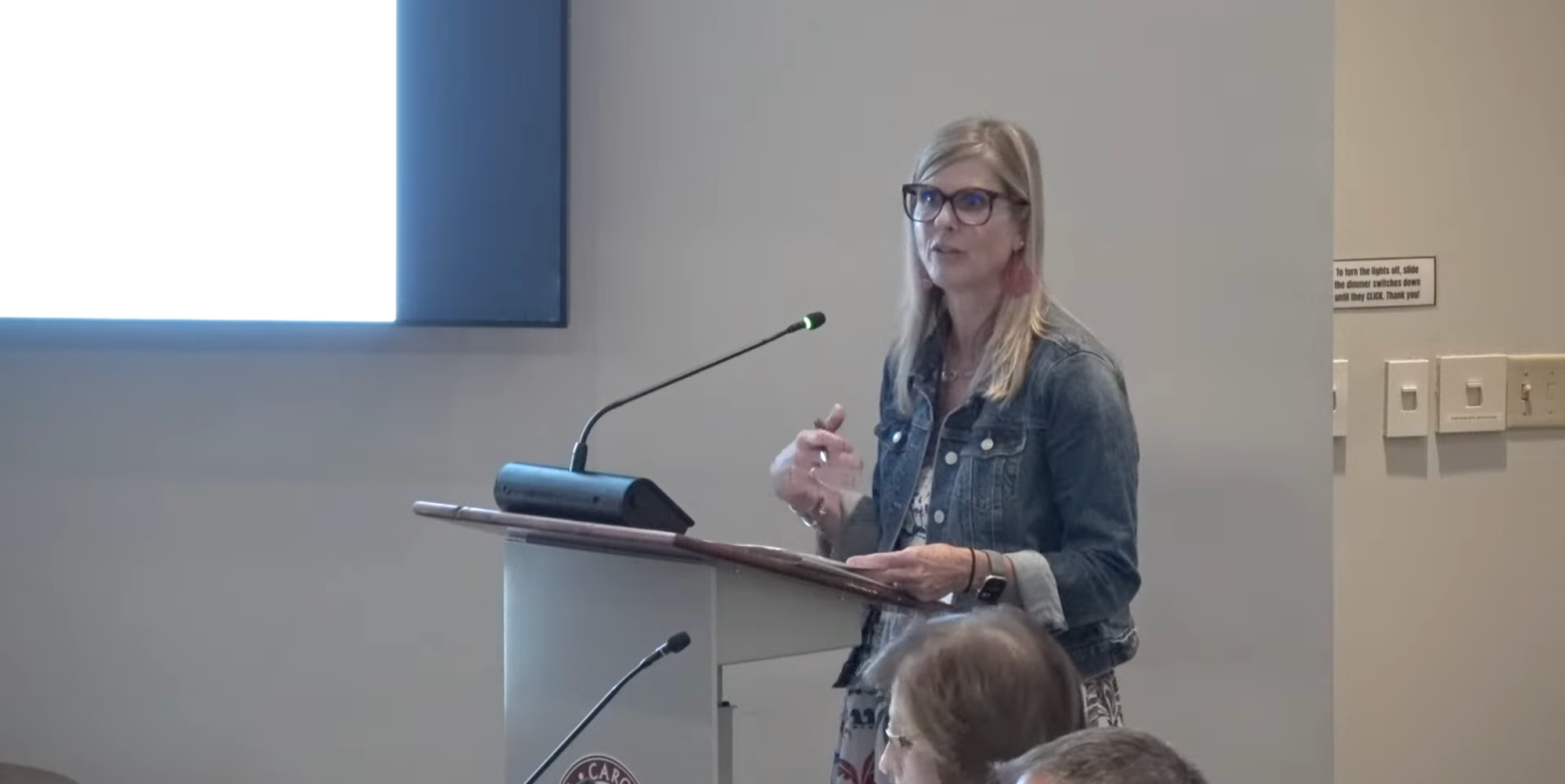
Councilman Porter Casey agreed that the current system generally works, but said its dependence on privately owned property makes the whole thing feel like a “house of cards.”
One downtown property owner has already converted two lots that had long been used by the public into paid parking. Other owners could restrict their spaces, redevelop the property, or make the same decision.
Then “functioning well” could become “full-blown-crisis” faster than a knife fight in a phone booth.
A privately owned space that happens to be open today is not the same thing as dependable public parking. It can disappear, become paid, or be reserved for a future development without the town having much say in the matter.
That distinction is becoming more important.
Town Manager Rich Cappola told council that recent state legislation had effectively eliminated the town’s ability to require parking minimums as part of new development. That means future projects could bring more residents, businesses, and customers downtown without being required to provide the amount of parking Clayton might previously have demanded.
“Ultimately, in the long run, we are going to have to get into more of the parking lot owning business,” Cappola said.
That’s a major shift.
For years, Clayton has largely relied on on-street spaces, private lots, and agreements with property owners to make the parking math work. Now, the town is openly acknowledging that downtown parking may have to be treated like public infrastructure — something Clayton owns, manages, and eventually pays to build.
The Railroad Parking Dream
Council’s clearest priority was formalizing parking along the railroad corridor along First Street.
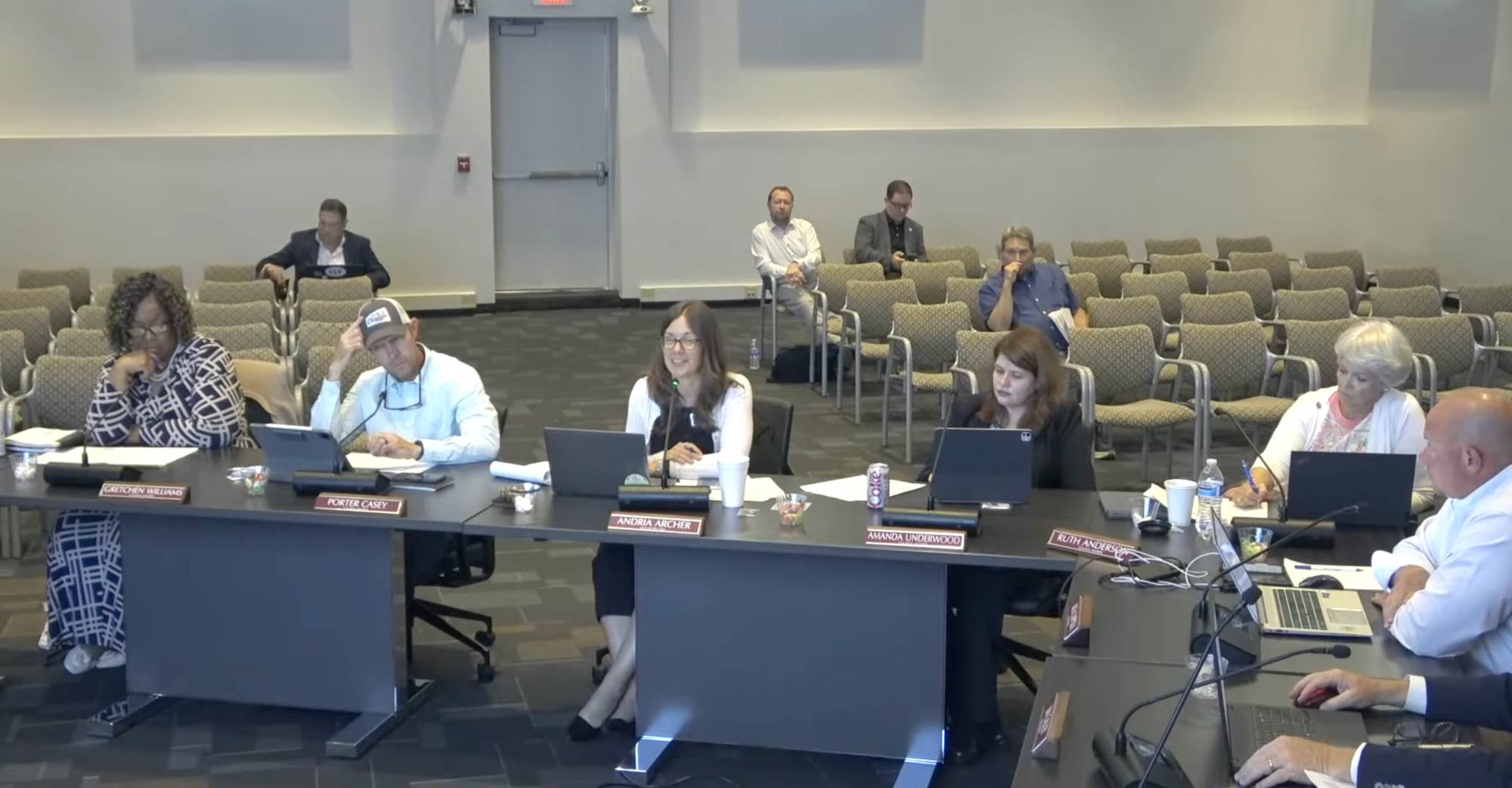
The idea has been in the works for decades, but Monday’s conversation was unusually direct. Mayor Pro Tem Andria Archer said nearly every other recommendation on the list becomes easier if the town first creates dependable parking along First Street.
At the end of the meeting, she put an exclamation point on council’s direction to staff:
“Full steam ahead.”
Cappola said Clayton has been working with the railroad for more than a year and is closer to an agreement than at any other point during his nine years with the town. One would seriously hope.
The latest concept has tried to keep the parking entirely within the railroad right-of-way. However, recent conversations with neighboring property owners suggest the design may extend slightly onto adjoining land without interfering with future development. That could allow the town to create more spaces and improve traffic flow through the corridor. The proposal may also — and should — include fencing between the parking area and the tracks.
The railroad still has the right to reclaim the land for future expansion. Cappola said officials have discussed the possibility of eventually adding several tracks, although those conversations have framed that expansion as unlikely to occur during the lifetimes of anyone currently involved.
The town appears to believe a parking investment would serve downtown long enough to justify that risk.
The bigger obstacle may be what goes underneath it.
The project must account for runoff from a 100-year storm event. If Clayton cannot manage that stormwater somewhere else, the town may have to install large underground detention vaults beneath the parking area.
The price tag goes way up if that’s the case.
Even so, Cappola described the First Street corridor as the “highest and best option” currently available.
“Hey, I’ve seen this one. This is a classic!” — Marty McFly
None of this is new.
Clayton has been discussing downtown parking accessibility and mobility for two decades. Wayfinding, employee parking strategies, public/private agreements, the railroad
What is new is the level of urgency coming from council and staff.
Christi Thompson, downtown business advocate and co-owner of the popular locations Three Little Birds, La Di Da Wine Bar, and the newly renovated Station, chaired the Downtown Development Association while the current Downtown Master Plan was being developed. She said an updated parking plan or strategy was not included in the plan’s original iteration.
“We had to go back and forth several times, and the discussions with staff were heated,” Thompson said.
According to Thompson, downtown advocates organized a parking petition to demonstrate that the issue was affecting businesses. Only then were staff asked to go back and develop parking strategies that could be incorporated into the planning process.
Even after that, she said, parking received minimal attention compared to other priorities.
Thompson doesn’t believe parking and pedestrian safety should compete with one another. She believes they should have been studied together.
People need safe ways to walk between businesses, public spaces, and their cars. The location of parking shapes pedestrian traffic. Crosswalks, curb extensions, and street changes affect parking, deliveries, and how customers reach businesses.
“They should have been done in tandem with each other,” Thompson said.
Instead, Clayton paid another consultant, Kimley-Horn, to begin designing the Main Street Pedestrian Improvement Project before it had completed a formal parking and utilization study. After several years of major stakeholders of Downtown Clayton begging for some sort of parking strategy.
That went about as well as you might expect.
A Brutal Meeting That Set The Town’s Plan on Fire
The town invited downtown business owners and property owners to review the preliminary pedestrian plans during a stakeholder meeting on October 22.
The project included several genuinely useful ideas: high-visibility crosswalks, additional pedestrian crossings and accessibility improvements.
It also included curb extensions that would eliminate parking, changes to traffic patterns and a one-way configuration around Horne Square that created serious questions about deliveries and how vehicles would safely reenter Main Street.
The meeting went over like a loud fart in a cramped elevator.
The public pushed back over potential parking losses, large truck access, and the practical operation of downtown. The town’s own written summary acknowledged that stakeholders called for a formal parking study before more changes were made.
What happened next is especially telling.
The town departments conducted separate informal parking assessments. One used geographic data. The other measured spaces in the field.
They came up with different answers.
The town averaged the two estimates and settled on 172 on-street spaces between Robertson and Smith Streets. It then announced that a third-party parking and utilization study would begin in early 2026 to establish what it called a “verifiable, objective baseline.”
Only after drawing plans that affected downtown parking did Clayton determine that it did not have a reliable count of the parking already there.
The pedestrian project was then scaled back. The proposed one-way pairing and turn-lane changes were postponed until better parking and traffic data became available. The immediate project was reduced to pedestrian improvements intended to limit the loss of parking.
The town also said it would stripe on-street spaces and refresh curb markings so everyone could clearly understand where parking begins and ends.
Eight months later, formal striping was again presented to council as one of the easy things Clayton could do next.
The bad news is that the original outside funding is no longer carrying the project forward. Town staff said Monday that Clayton would have to determine the new construction and utility-relocation costs and submit the project during a future LAPP funding cycle—potentially not until October 2027.
What staff did not clearly explain was exactly how the town got from an active, funded pedestrian project to waiting years for another application window.
The Problem With The “Perceived Problem”
Dan here. We’re about to delve into opinion.
I’ve been paying pretty close attention to Downtown Clayton since around 2012. In 2014, I attended my first town strategic-planning public-input session. I’ve attended several since. I served alongside Christi Thompson on the Downtown Development Association while the most recent Downtown Master Plan was being developed, and I was in the room for last year’s pedestrian-plan debacle.
And let me tell you: at every single one of those public input meetings, some asshole consultant eventually makes a joke about how every town thinks it has a parking problem when what it really has is a “perceived parking problem.”
Honestly, I don’t entirely disagree.
Perception is a huge part of Downtown Clayton’s parking problem. Walker’s study supports that argument. Spaces are available outside the busiest blocks, but people either don’t know they exist, don’t know they’re open to the public, or don’t feel confident they can safely and conveniently get from those lots to their destination.
Thompson said she heard the same argument repeatedly while serving on the Downtown Development Association and the town’s parking task force. The proposed response was supposed to include clearer maps, promotion of the public-private lots, and videos showing how quickly someone could walk downtown from places such as Compare Foods.
Very little of that communication strategy ever materialized.
If only we had thought to get wayfinding signage designed.
Wait a minute! We did!
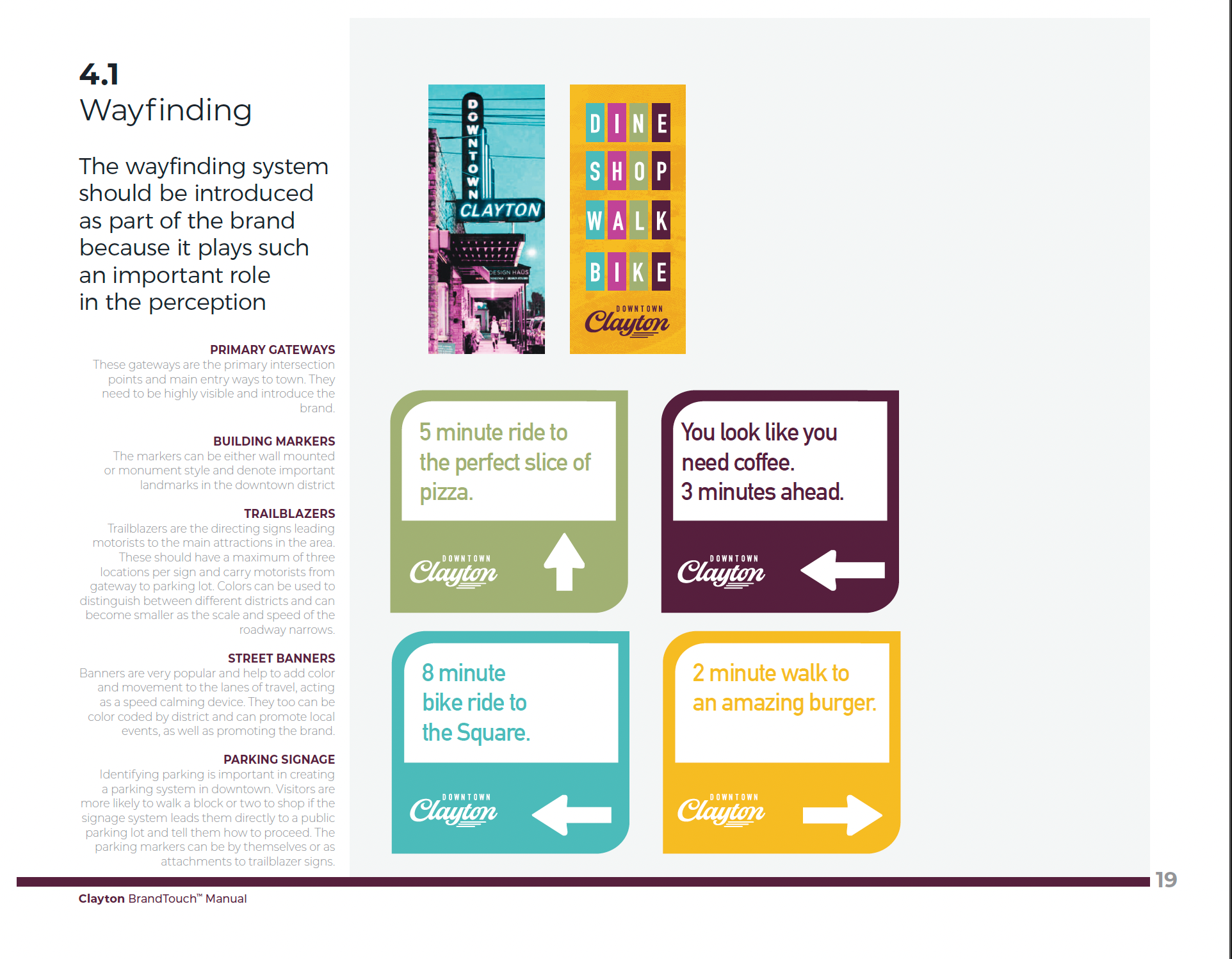
As part of the downtown branding update created by Arnett Muldrow, a South Carolina planning and branding firm that town staff insisted we use, the town paid for a wayfinding system that included designs for signs directing visitors toward public parking and other downtown destinations.
Those signs were designed.
They were presented.
They were paid for.
They that was the end of that.
Instead, the parking signs that eventually appeared tried to cram a paragraph’s worth of information into something motorists are supposed to understand while driving past and frantically looking for a place to park.
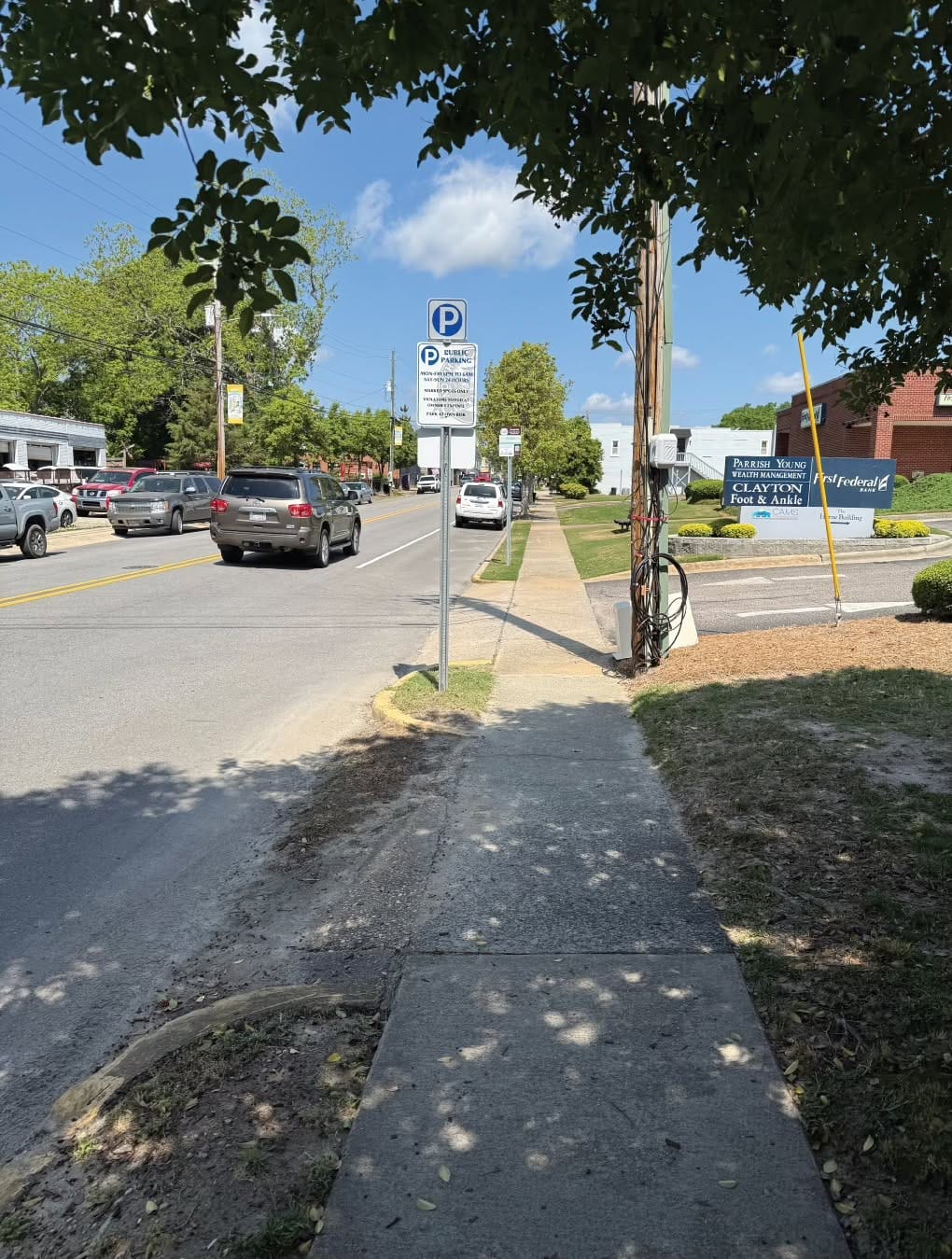
As far as perception goes, they might as well say NO PARKING.
So here we are, years later, with council once again identifying wayfinding as “low-hanging fruit” while residents continue circling Main Street under the impression that there is nowhere to park.
Councilwoman Amanda Underwood said Monday that one of the most common complaints she hears is that people simply do not know where the public parking is.
That’s such an easy problem to fix.
Better signs won’t create more spaces. They won’t prevent a private lot from becoming paid parking or being redeveloped. They won’t solve delivery conflicts or eliminate the eventual need for a much larger public investment.
But if Clayton believes downtown has enough parking and the real problem is that nobody knows where it is, the town should probably start by telling people where it is.
It really is that simple.
It could be fixed in a weekend while Clayton waits until at least 2027 to apply again for LAPP funding it lost for the pedestrian project.
Put up the signs. Clearly identify every public lot. Create a consistent parking symbol people can recognize from their cars. Make sure the town’s maps match what actually exists on the street. Show visitors how little time it takes and how safe it is to walk from the lots we have available.
Instead, Clayton paid for a system, put it on a shelf, and went back to throwing money at consultants to tell us what we already know.
Let’s fix the damn perception first.
Also, not for nothing, but I can’t tell you how frustrating it is for people like Christi and me who spent years volunteering our time and energy, saying exactly what this paid parking study has now told the town and offering many of the same solutions Clayton just paid a consultant to recommend.
That leaves me with two possibilities: either council is not hearing directly from the advisory boards created to advise it, or it is hearing them and not listening.
Neither is a particularly good use of anyone’s time.
Weekend Picks
A quick rundown of what’s happening around Clayton this weekend. Music, markets, food, family stuff, and anything else worth leaving the house for.

Friday
Pottery Camp | 12973 Clayton Blvd
Slab Clay Tray Workshop | 6–8pm
Create your own custom tray or dish from a slab of clay, then decorate it with one of Pottery Camp’s underglaze transfer designs. The class includes your choice of shape and design, along with instruction in clay hand-building and glaze transfer techniques. Recommended for ages 10 and up, although younger children can participate with a little help.
The Cardinal Bar | 401 E. Main Street
Against the Odds
Against the Odds takes over The Cardinal for a late-night set packed with high-energy covers and familiar favorites. Bring your crew, grab a drink and prepare to dance and sing along well past midnight.
Saturday
Deep River Brewing Company | 700 W. Main Street
Pop-Up Vendor Market | Noon
Shop handmade goods from local vendors while enjoying a cold beer and empanadas from Mike Nice Empanadas. The market will feature soaps, natural tallow products, crystals, home décor, music finds and plenty of one-of-a-kind gifts.
Clayton Community Center | 715 Amelia Church Road
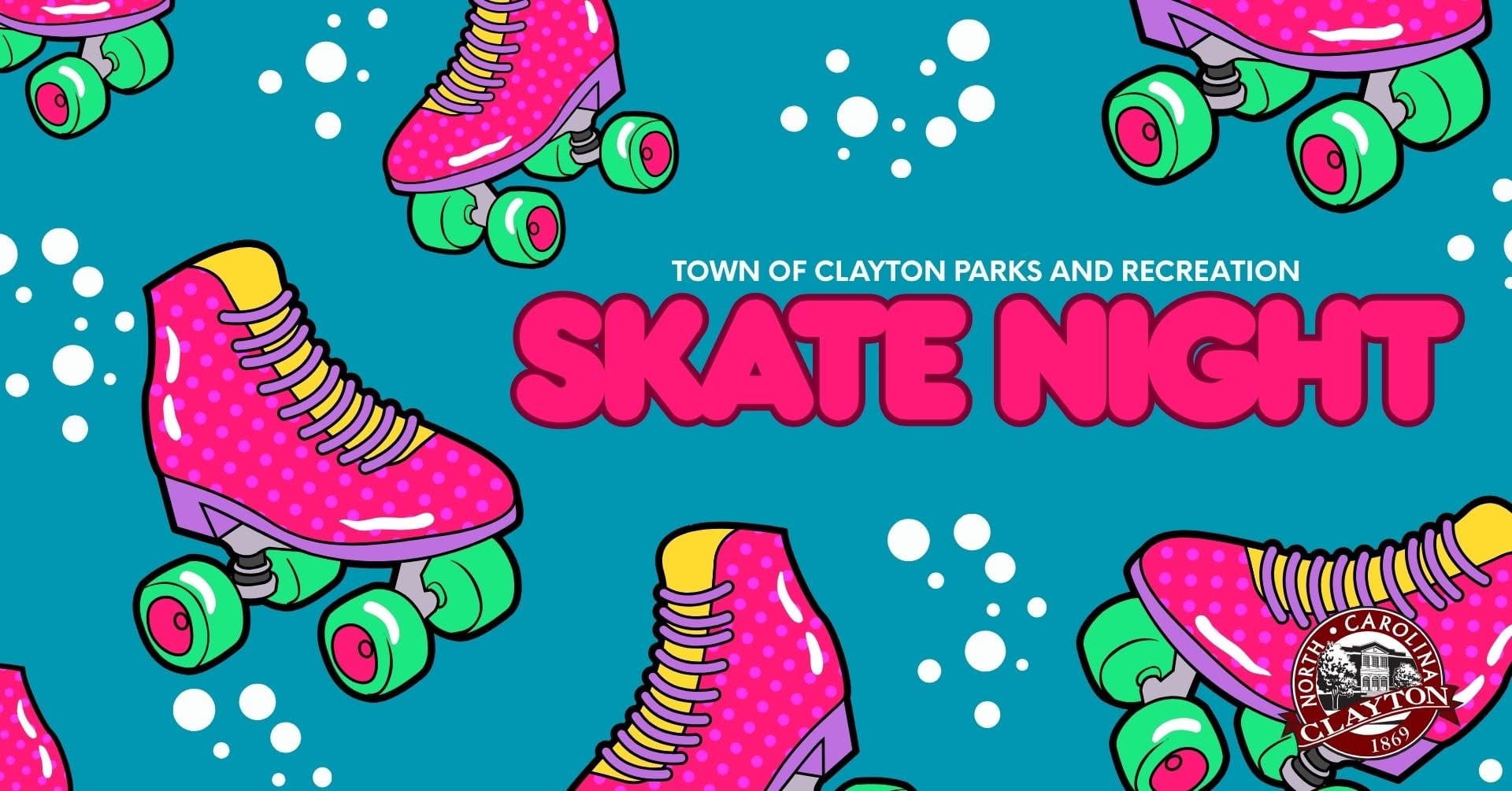
Skate Night | 5pm
The Clayton Community Center is turning its indoor gym into a roller rink for an evening of skating, music from a live DJ and family-friendly fun. Bring your own roller skates or blades and remember that advance registration is required. Admission is $6 for residents and $9 for nonresidents.
Sunday
Deep River Brewing Company | 700 W. Main Street
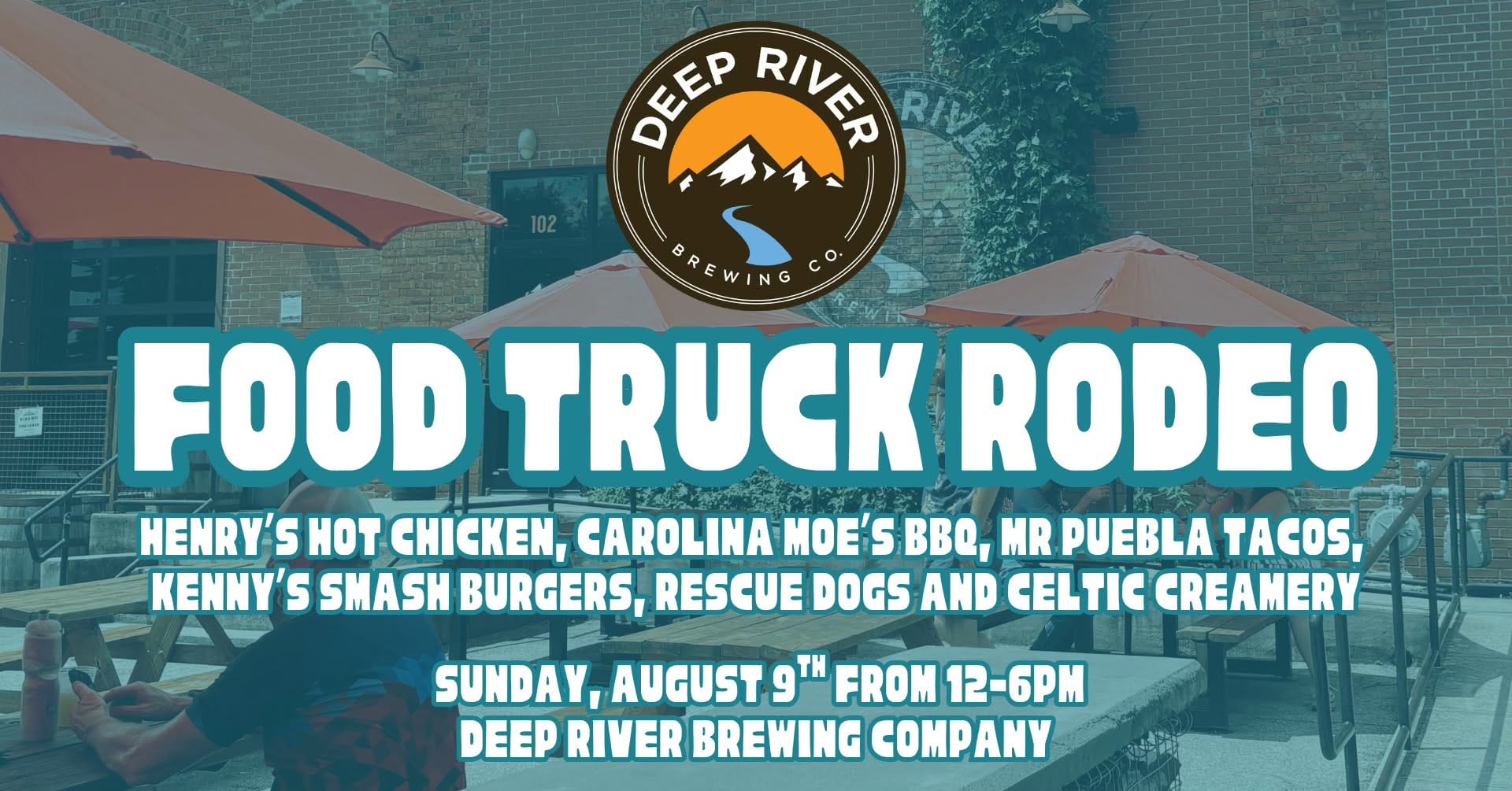
Sunday Food Truck Rodeo | Noon
Come hungry for an afternoon featuring Henry’s Hot Chicken, Carolina Moe’s BBQ, Mr. Puebla Tacos, Kenny’s Smash Burgers, Rescue Dogs and Celtic Creamery. The Stuart Smalley Trio will perform from 2–5pm, with cold beer flowing all afternoon.
Clayton Rocks | 427 E. Main Street
Open Jam | 3pm
Local musicians can take the stage during Clayton Rocks’ monthly open jam, whether they want to play a song, sit in with other performers or simply see what happens. Musicians should claim a spot through the online sign-up form ahead of time.
One Good Thing
Every week, we're going to try and end on a positive note. Snapshots of Clayton history, local legends, monumental ackomplishments in the community, and more. This section is supposed to make you feel good.
Clayton Sunsets Are Something Else
Downtown Clayton got one hell of a sunset Monday night, captured here by council member, Amanda Underwood.
These colors show up when the setting sun has to travel through more of the atmosphere, scattering away much of the blue light and leaving the reds, oranges and pinks behind. Around here, the best ones often happen when the western horizon clears after a summer storm but higher clouds remain to catch the light. The more you know.
I've said forever that no one is better at capturing the sunset glow than Amanda.
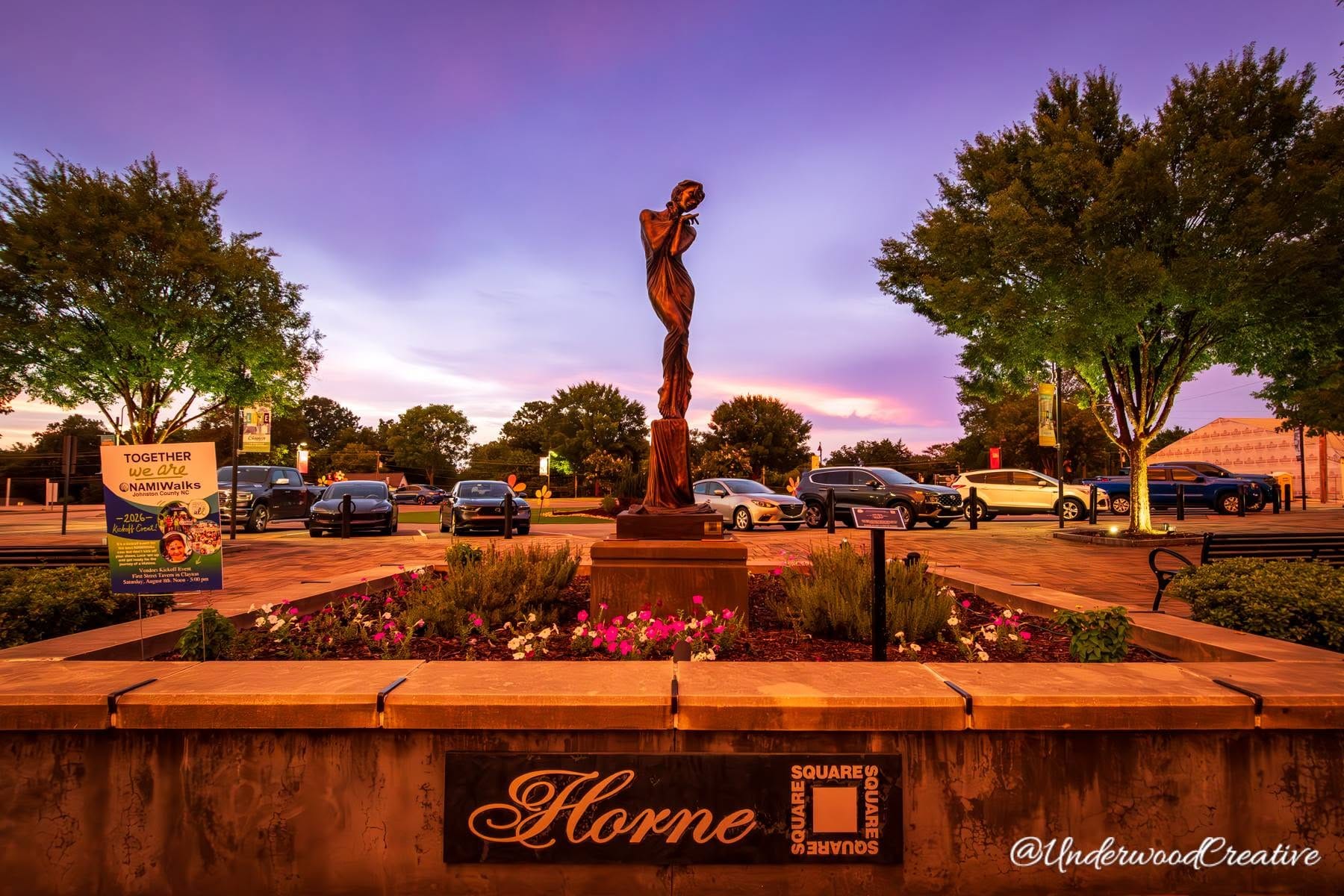
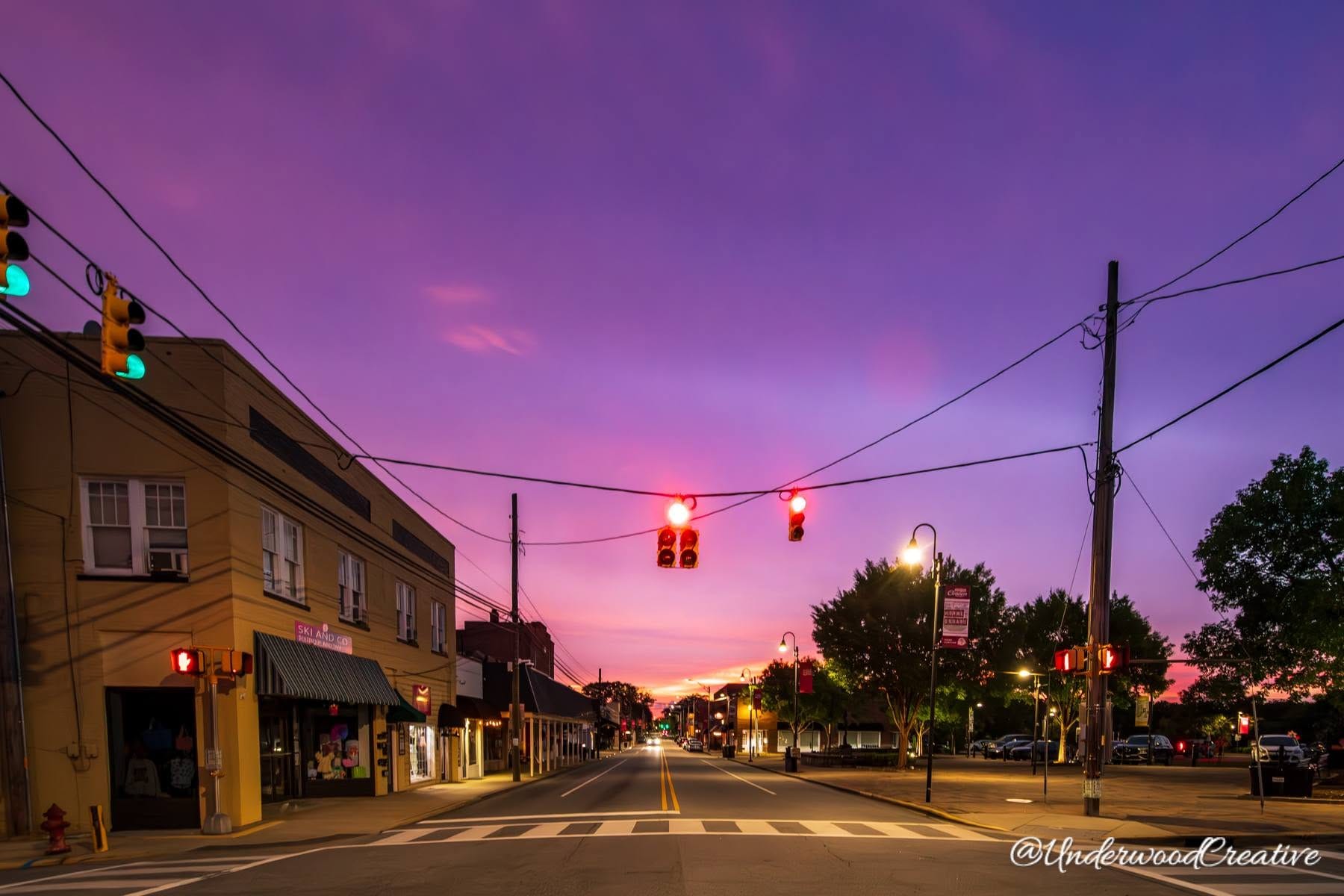
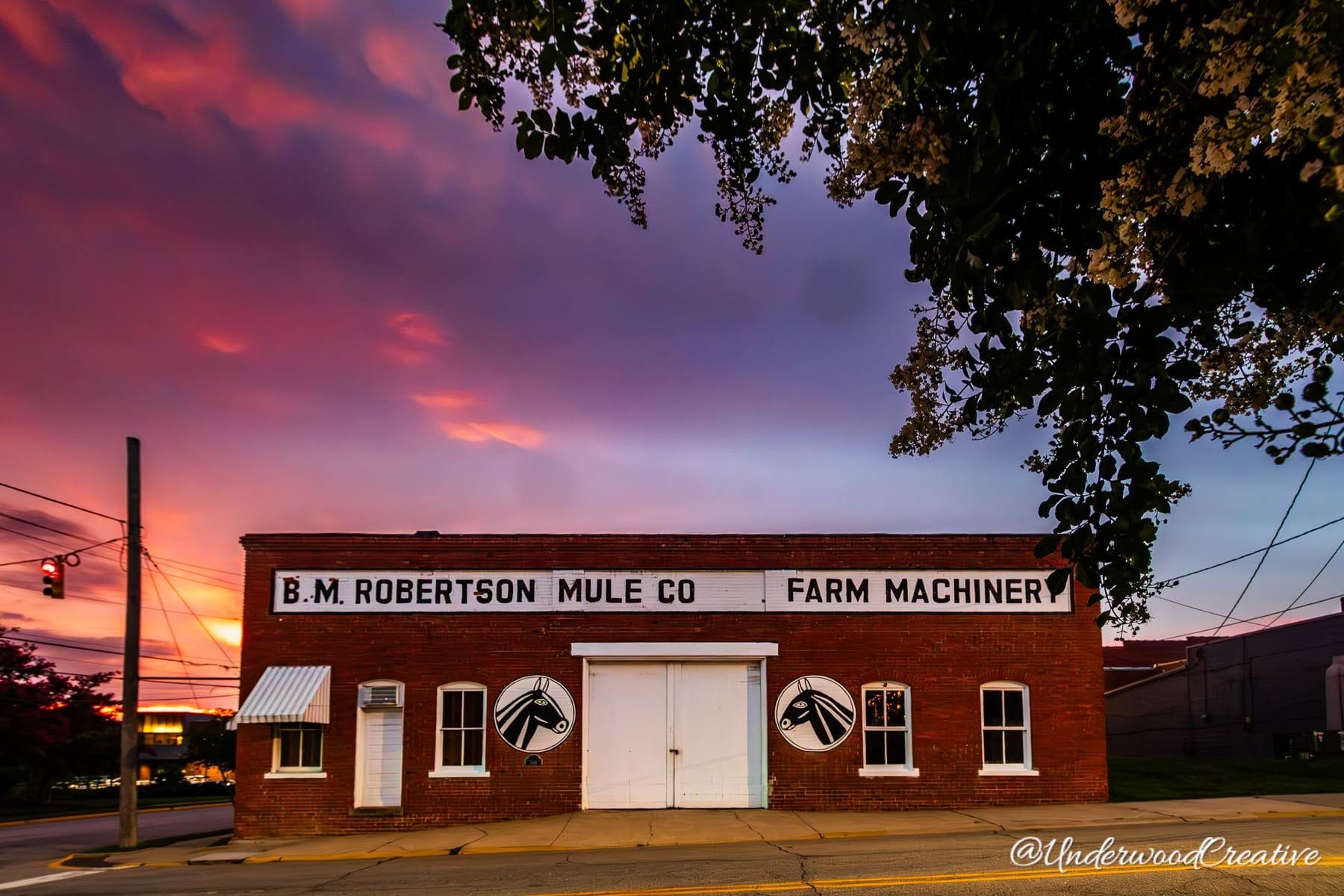
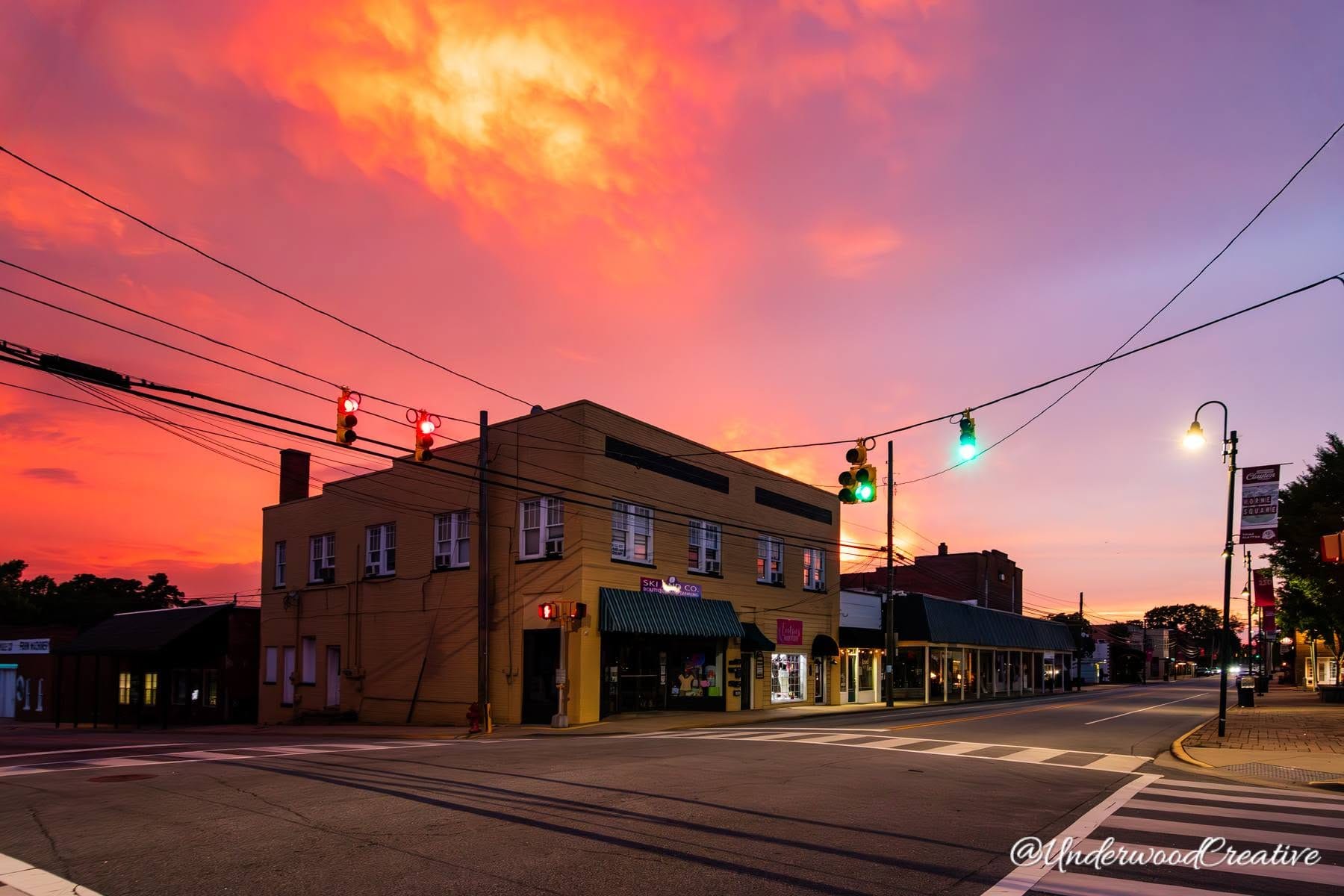
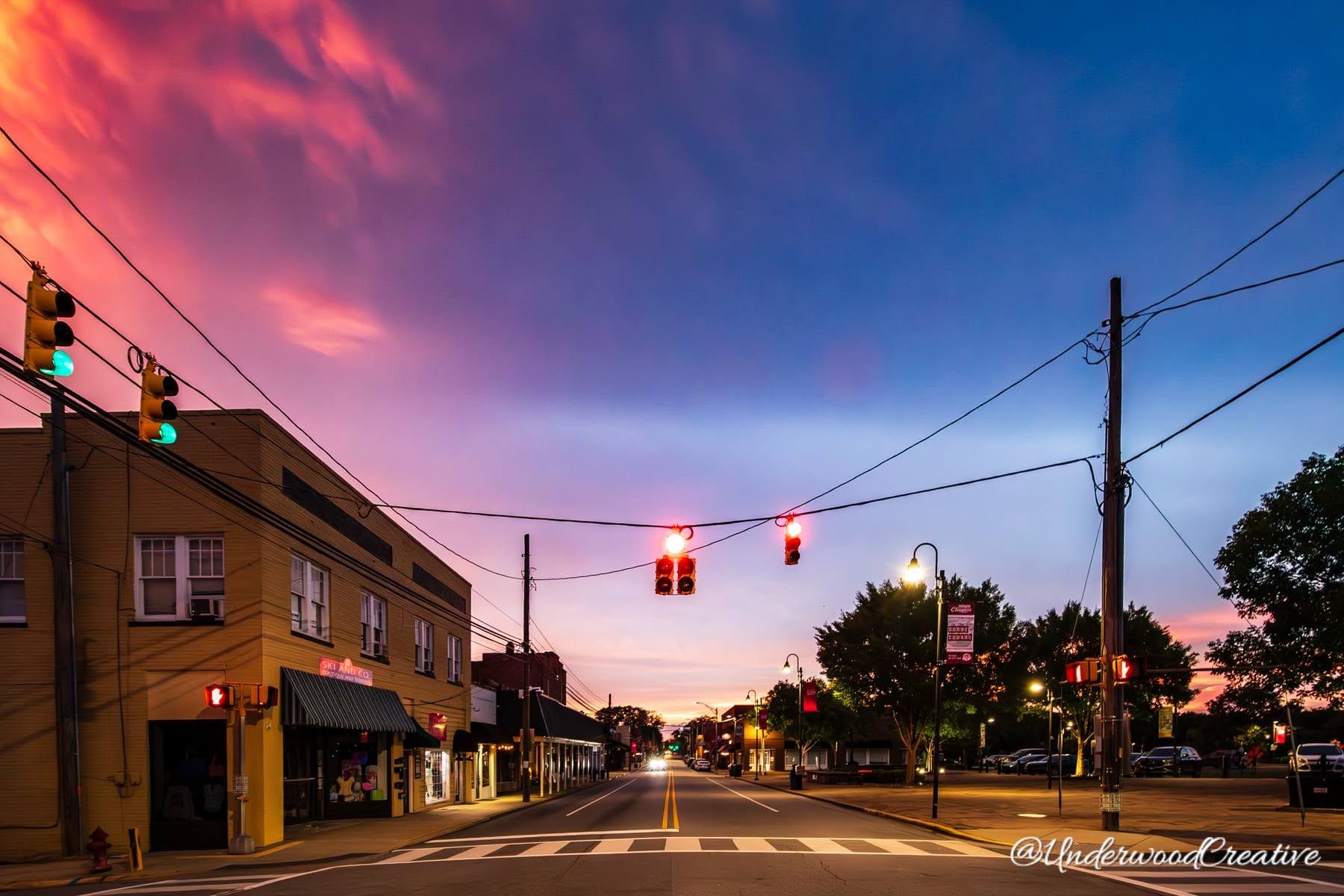
Downtown Clayton put on one hell of a show Monday night, washing Horne Square, Main Street and the Robertson Building in pink, purple and orange. Photos by Amanda Underwood/Underwood Creative.
Photos by Amanda Underwood. If you like her photos, she has beautiful Clayton post cards featuring her work available at Odd One Out and The Station.
Become a Paid Clayton Dispatch Member
$5 per month or $50 per year Membership helps support independent local reporting, expand coverage, and pay for future Dispatch upgrades.
Members receive:
- The ability to comment on Dispatch stories
- Priority question submissions for the upcoming Council Watch-Along with Dan podcast
- Regular behind-the-scenes reporting notes and project updates
- Member discounts and early access to Clayton Dispatch merch
- An exclusive Clayton Dispatch sticker for monthly members*
- An exclusive Clayton Dispatch tote bag for annual members.
The actual reporting will remain available to everyone. Paid membership helps make more of it possible.
Also, this can get us a whole lot closer to a print edition.
*Stickers will be given out every quarter.